
The cheapest insulation choice today might be the most expensive mistake for your roof timbers tomorrow. When comparing sheep wool vs mineral wool for lofts, many Scottish homeowners focus only on the initial purchase price. However, in our unique climate, the ability to manage moisture is just as vital as trapping heat. You need a material that works with the breathability of your home rather than against it.
It’s frustrating to watch energy costs rise while worrying about dampness in older stone walls. You deserve a solution that delivers a warmer home and lower bills without risking timber rot. This guide helps you discover the best insulation material for your specific needs by comparing thermal performance and long-term value. We’ll look at how these materials meet the April 2026 Scottish Building Standards, such as the 0.16 W/m²K U-value requirement. This ensures your loft remains a safe, efficient, and breathable space for years to come.
Key Takeaways
- Understand the core differences between industrial mineral fibres and renewable sheep’s wool to select the right material for your home’s specific structure.
- Learn how natural insulation acts as a buffer against Scotland’s damp climate by absorbing moisture whilst protecting your loft timbers from rot.
- Compare the long-term financial value of sheep wool vs mineral wool for lofts by looking beyond initial costs to energy savings and property maintenance.
- Explore the health benefits of using non-irritant materials that can naturally neutralise indoor air pollutants like formaldehyde.
- Determine whether your project requires the high fire-resistance of mineral wool or the breathability required for heritage tenements and cottages.
Understanding the Basics: What are Sheep Wool and Mineral Wool?
Selecting the right material for your home requires a clear understanding of what these products actually are. When weighing up sheep wool vs mineral wool for lofts, you’re choosing between a manufactured industrial fibre and a processed natural resource. Both materials come in standard rolls or batts designed to fit snugly between typical Scottish loft joists, usually at widths of 400mm or 600mm. Their primary job is the same; they trap pockets of air to create a thermal barrier that prevents heat from escaping through your roof. This simple mechanism is the most effective way to reduce energy bills and improve domestic comfort in our cold northern climate.
Mineral Wool: The Industrial Standard
Mineral wool has long been the default choice for UK construction due to its reliability and cost-effectiveness. It comes in two main forms. Glass wool consists of recycled glass melted at high temperatures and spun into fine threads. Stone wool, often called rock wool, uses volcanic rock like basalt. These fibres are incredibly effective at resisting heat transfer. Because they are made from mineral content, they are naturally non-combustible. Stone wool, for instance, can withstand temperatures up to 1,177°C. This makes mineral wool a reliable choice for high-density housing or projects where fire safety is the absolute priority. It’s widely available and performs consistently in standard thermal insulation projects across the country.
Sheep Wool: The Sustainable Alternative
Wool insulation offers a more traditional, nature-based approach to home comfort. It’s made from the fleece of sheep, which is thoroughly cleaned and treated with safe additives to ensure it resists pests and fire. Unlike industrial alternatives, sheep wool is a renewable resource that requires significantly less energy to manufacture. The material is composed of protein fibres that can absorb up to 33% of their own weight in moisture without losing their insulating properties. This is a major advantage for Scotland’s older building stock. It’s often the preferred choice for eco-builds or period cottages where maintaining the breathability of the structure is essential. When deciding between sheep wool vs mineral wool for lofts, the choice often comes down to whether you prioritise industrial precision or natural moisture management.
Thermal Performance and Moisture Management in the Scottish Climate
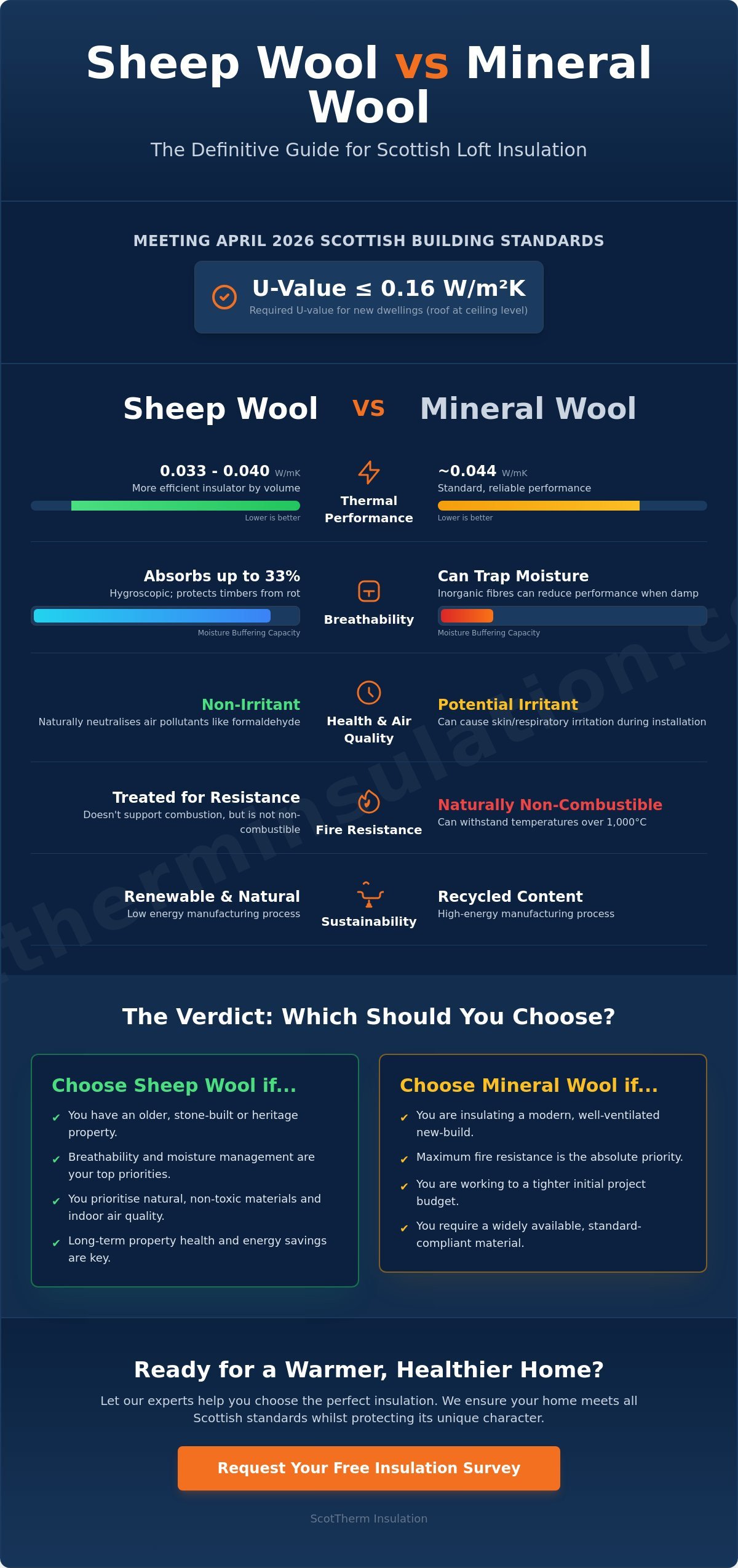
In the damp, windy conditions of a Scottish winter, thermal performance is about more than just a number on a packet. When evaluating sheep wool vs mineral wool for lofts, you must consider how these materials behave when the humidity rises. The technical ability of a material to conduct heat is measured by its lambda value. Standard glass mineral wool typically sits around 0.044 W/mK, whilst sheep wool products in the UK range from 0.033 to 0.040 W/mK. This indicates that sheep wool is often a more efficient insulator by volume, providing superior heat retention for the same thickness of material.
The 2026 Scottish Building Standards Technical Handbook sets a strict legal requirement for new dwellings; roof insulation at ceiling level must achieve a maximum U-value of 0.16 W/m²K. This U-value is a measure of heat loss, where a lower number represents better insulation. For mineral wool, reaching this standard usually requires a depth of 270mm. Whilst this is effective in modern, sealed environments, it doesn’t always account for the complex moisture management needed in older stone-built homes across Edinburgh or the Highlands.
Heat Retention: U-values and Conductivity
Achieving a 0.16 W/m²K target is essential for long-term energy efficiency in any Scottish home. Mineral wool remains a reliable, cost-effective choice for meeting these standards in modern builds. Yet, its performance can suffer if the loft space becomes damp, as moisture trapped between the inorganic fibres can conduct heat away from the living space. Sheep wool maintains its thermal efficiency even when moisture levels rise, making it a robust choice for the unpredictable Scottish weather. Detailed research from the Department of Energy on Insulation Materials highlights how different material structures interact with their environment to provide varying levels of protection.
Breathability: Why Moisture Control Matters
The real difference in sheep wool vs mineral wool for lofts lies in how they handle water. Sheep wool is hygroscopic. It can absorb up to 33% of its own weight in moisture without losing its loft or its ability to keep you warm. This is a vital feature for traditional tenements and cottages in Fife or Perth. These older buildings rely on the movement of air and moisture through their structures to prevent timber rot.
Mineral wool is generally hydrophobic, meaning it repels water. If condensation forms in a poorly ventilated loft, moisture can sit on the surface of the mineral fibres or soak into the wooden joists. This creates a high risk of interstitial condensation, where water traps inside the roof structure and causes hidden decay. To protect your property, you might consider a professional loft insulation assessment to ensure your ventilation matches your material choice. Choosing a breathable material ensures that your home stays dry, warm, and structurally sound for decades.
Health, Safety, and Environmental Impact
Beyond thermal efficiency, the choice between sheep wool vs mineral wool for lofts significantly affects the air quality and safety of your living environment. For many homeowners, the physical experience of installation is the first major difference. Traditional mineral wool is known for the ‘itch’ factor, caused by tiny glass or stone fibres that can irritate the skin, eyes, and respiratory system. Whilst modern manufacturing has improved these materials, protective equipment remains a necessity during installation. In contrast, sheep wool is entirely non-toxic and safe to handle without gloves or masks. This makes it a favourite for those planning a DIY upgrade or for families concerned about airborne fibres entering the living spaces of their homes.
Air Quality and VOCs
Sheep wool provides a unique health benefit by acting as a natural air purifier. The keratin in the wool fibres can permanently neutralise harmful chemicals like formaldehyde, nitrogen dioxide, and sulphur dioxide. This is particularly valuable for families in coastal towns like North Berwick, where airtight modern renovations can sometimes trap indoor pollutants amongst inhabitants. Whilst sheep wool filters the air, modern mineral wool manufacturers have also made strides. Many now use bio-based binders instead of traditional phenol-formaldehyde to reduce Volatile Organic Compound (VOC) emissions, ensuring that both materials meet strict 2026 safety standards.
Fire Resistance and Sustainability
Fire safety is a critical factor where mineral wool holds a distinct technical advantage. Stone mineral wool is classified as Euroclass A1 non-combustible, meaning it won’t burn or contribute to a fire. It’s the gold standard for high-risk areas or multi-occupancy buildings. Sheep wool is naturally flame-retardant and will self-extinguish; however, it’s typically treated with a mineral salt like borax to achieve the necessary UK fire safety ratings. This treatment ensures it meets domestic standards whilst remaining a low-impact choice for the environment.
From an environmental perspective, the lifecycle of these materials tells two different stories. Sheep wool is a renewable, biodegradable resource with very low embodied energy. According to the Carbon Smart Materials Palette: Sheep’s Wool, this material can actually sequester carbon, making it a powerful tool for eco-conscious renovations. Mineral wool, whilst more energy-intensive to produce due to the high-heat melting process, is highly recyclable. Most modern products contain a high percentage of recycled glass or stone. When comparing sheep wool vs mineral wool for lofts, your decision may rest on whether you value a carbon-negative lifecycle or the ultimate peace of mind provided by non-combustible industrial standards.
Cost, Durability, and Installation Logistics
Financial considerations often dictate the direction of a home improvement project. When analysing sheep wool vs mineral wool for lofts, the immediate price difference is the most obvious factor. Mineral wool remains the most cost-effective way to achieve the 270mm depth required by modern regulations. Its industrial manufacturing process allows for high-volume production at a lower price point. Sheep wool is a premium material, and its cost reflects the extensive cleaning, scouring, and mineral-salt treatments needed to prepare natural fleece for a loft environment. However, the initial purchase price is only one part of the value equation.
Upfront Costs vs Long-Term Savings
Investing in higher-quality materials can pay dividends over the lifespan of a property. Sheep wool is incredibly resilient and maintains its loft for 40 years or more without significant settling. Cheaper mineral wool products can occasionally compress over several decades, which reduces their thermal resistance and may require a top-up later. By choosing a material that manages moisture and resists settling, you protect the structural health of your roof timbers. To help manage the initial investment, many homeowners can access insulation grants Scotland, which provide vital funding for energy-efficiency upgrades in 2026.
Professional Installation in Scotland
The success of any insulation project depends on the quality of the fit. Even the best materials will fail if ‘cold bridges’ are left around loft hatches or along the eaves. These gaps allow heat to bypass the insulation, leading to cold spots and potential condensation. Professional installation is particularly important in regions like Stirling and Edinburgh, where traditional building styles present unique challenges. Sheep wool is often easier to fit into the irregular joist spacings found in heritage homes because of its natural elasticity. It can be wedged into tight spots more effectively than rigid mineral batts.
Regardless of your material choice, maintaining clear airflow at the eaves is a mandatory requirement to prevent timber decay. The approach taken by ScotTherm Insulation to loft insulation scotland ensures that your home meets 2026 standards whilst preserving the necessary ventilation for your roof structure. Properly installed insulation should be a ‘fit and forget’ solution that delivers consistent comfort for the next generation of inhabitants.
If you are ready to upgrade your home’s thermal performance, you can contact our team for a professional loft insulation consultation to determine which material best suits your property’s age and construction.
The Verdict: Which Should You Choose for Your Scottish Home?
Deciding between sheep wool vs mineral wool for lofts depends on your property’s construction, your long-term goals, and your budget. There is no single “correct” material for every house. Instead, there is a right material for your specific roof structure and environmental priorities. By matching the insulation to the age and style of your home, you ensure the best balance of thermal efficiency and structural health.
When to Choose Mineral Wool
Mineral wool is the logical and safe choice for modern Scottish builds with standard ventilation systems. If you have a limited budget but need to meet the 270mm depth requirement, this material provides reliable thermal protection at the lowest upfront cost. It’s also the preferred option for homeowners who prioritise the highest possible fire resistance rating. Many government-backed schemes, such as ECO4 Scotland, utilise mineral wool as the standard material for funded energy-efficiency upgrades. It delivers a proven, cost-effective result that satisfies building standards whilst keeping installation times to a minimum.
When to Invest in Sheep Wool
Sheep wool is the premium choice for wool insulation in older properties, particularly Edinburgh tenements and stone cottages. If your home features historic timbers or you’ve struggled with humidity issues, the hygroscopic nature of sheep wool provides a vital safety net. It protects your roof from decay by regulating moisture in a way that mineral wool cannot. This makes it a superior investment for heritage buildings where breathability is essential for structural longevity. It’s also the ideal material for those wanting a carbon-negative loft that uses renewable, natural fibres to improve indoor air quality.
Some homeowners ask about a hybrid approach, such as using mineral wool for the base layer and sheep wool on top. Whilst this is technically possible, it’s usually better to stick to one material type to ensure consistent moisture management across the entire loft space. Mixing materials can sometimes complicate the way your roof ‘breathes’, particularly in the damp Scottish climate. Before making a final decision, you should consider how each material interacts with your home’s existing ventilation and airflow at the eaves.
The most effective way to guarantee performance is to seek a specialist opinion. We provide expert assessments to help you navigate the complexities of sheep wool vs mineral wool for lofts. Our team understands the unique requirements of Scottish homes and ensures every installation meets the latest 2026 standards. Contact ScotTherm Insulation today to book a professional survey and secure the long-term health and warmth of your property.
Secure a Warmer, Drier Future for Your Scottish Home
Choosing the right material ensures your property meets 2026 building standards whilst protecting the structural integrity of your roof timbers. Whether you prioritise the non-combustible reliability of mineral wool or the unique moisture-regulating power of natural fleece, the quality of installation remains the deciding factor for thermal efficiency. Comparing sheep wool vs mineral wool for lofts reveals that your home’s age and construction style should always lead your final decision. It’s about finding the balance between upfront costs and the long-term health of your property.
Our expert local installers across Edinburgh and Fife are specialists in both mineral and sustainable sheep wool applications. As fully certified and insured Scottish insulation experts, we provide the technical proficiency needed to eliminate cold bridges and maximise energy savings. You don’t have to navigate these technical specifications alone. We are here to ensure your investment delivers a cozy, cost-effective environment for decades to come.
Book Your Free Professional Insulation Survey in Scotland Today. Taking this proactive step ensures your home remains a warm, breathable sanctuary throughout the harshest Scottish winters.
Frequently Asked Questions
Is sheep wool insulation more effective than mineral wool?
Sheep wool is often more effective at heat retention by volume because it has a lower thermal conductivity (lambda value). It also maintains its insulating performance even in high humidity, whereas mineral wool can lose efficiency if it becomes damp. Your choice depends on whether you value natural moisture regulation or the lower initial cost of industrial materials.
Does sheep wool insulation smell like wet sheep in the loft?
No, professionally processed sheep wool does not have an odour. The intensive scouring and cleaning process removes the natural oils and lanolin that carry the “sheep” smell. Once the material is installed in your loft, it is completely odourless and remains that way for its entire forty-year lifespan.
Is mineral wool safe to have in my home if I have allergies?
Modern mineral wool is safe for allergy sufferers once it’s correctly installed and sealed behind your ceiling. However, the fibres can still be respiratory irritants during the fitting process or if the loft is frequently accessed. If your household is particularly sensitive to dust, sheep wool is the safer alternative as it’s non-toxic and non-irritant.
How thick should my loft insulation be in Scotland in 2026?
To meet the 2026 Scottish Building Standards, mineral wool should typically be 270mm thick to achieve a 0.16 W/m²K U-value. When comparing sheep wool vs mineral wool for lofts, you’ll find that sheep wool can often reach this target with slightly less depth. This is due to its superior thermal conductivity compared to standard glass wool products.
Can sheep wool insulation help prevent damp and mould in my roof?
Yes, sheep wool is highly effective at managing dampness because it’s hygroscopic. It draws moisture out of the air and away from your roof timbers, releasing it slowly when the environment dries out. This natural behaviour prevents the condensation that often leads to mould growth in traditional stone-built homes across Edinburgh and Fife.
Does sheep wool insulation attract moths or other pests?
No, the sheep wool used for insulation is treated with mineral salts like borax during the manufacturing process. This treatment makes the fibres unpalatable to moths, beetles, and other common household pests. It ensures your insulation remains structurally sound and entirely pest-free for the life of the building.
Can I install new insulation over my old mineral wool?
You can usually install new rolls over existing mineral wool provided the original material is dry and in good condition. This “top-up” method is a cost-effective way to improve your home’s energy rating without the mess of a full removal. You must ensure the existing layer isn’t compressed, as this can trap moisture against your ceiling.
Which insulation material has the best fire rating?
Mineral wool, specifically stone wool, holds the highest fire safety rating of Euroclass A1. This means the material is non-combustible and won’t contribute to the spread of a fire. Whilst sheep wool is naturally flame-retardant and treated to meet safety standards, mineral wool remains the gold standard for fire protection in high-density housing.