
The standard synthetic insulation sitting in most lofts across Fife and Edinburgh might actually be working against the health of your home. Whilst traditional materials trap heat, they often struggle with the moisture levels common in Scottish stone properties, leading to the dampness and condensation that plague 28.7% of households currently in fuel poverty. Choosing wool insulation isn’t just a sustainable preference; it’s a technical necessity for buildings that need to breathe. This natural fibre manages moisture without losing its thermal performance, ensuring your living space stays dry and warm even when the haar rolls in.
You deserve a home that offers maximum savings and comfort without compromising on environmental values. We understand that you want a reliable solution that supports the Scottish environment whilst slashing your energy bills. This guide explains why natural sheep’s wool is the superior choice for meeting the strict 0.12 W/m²K roof U-value requirements set by the 2023 Scottish building standards. You’ll also learn how to access the £7,500 Home Energy Scotland Grant to make this premium, fully approved upgrade affordable for your household.
Key Takeaways
- Understand how the hygroscopic nature of sheep’s wool allows it to absorb up to 33% of its weight in moisture, protecting your home’s structure from dampness and condensation.
- Discover how wool insulation generates its own heat when absorbing moisture, providing a unique secondary warming effect that synthetic materials cannot match.
- Compare the 50-year thermal performance and embodied energy of natural fibres against mineral wool to determine the best long-term value for your property.
- Identify the critical areas in your home, such as draughty ground floors and lofts, where natural materials offer the most significant impact on indoor air quality and comfort.
- Learn why a professional heat loss survey by fully approved installers is essential for achieving maximum savings and meeting the latest Scottish building regulations.
What is Wool Insulation and Why Does it Suit the Scottish Climate?
Scottish homes face a unique set of meteorological challenges. From the damp sea mists of the Firth of Forth to the biting winters in the Fife hills, maintaining a stable indoor temperature requires more than just a thick layer of padding. To understand the foundations of this technology, many homeowners first ask: What is wool insulation? Essentially, it’s a high-performance natural fibre harvested from sheep that’s refined into a durable building material. Unlike synthetic alternatives, wool insulation is naturally evolved to survive harsh conditions. It regulates temperature effectively; it keeps your home cool during the rare Scottish heatwaves and locks in heat when the temperature drops below zero.
Breathability is perhaps the most vital feature for our local architecture. Edinburgh is famous for its historic stone-built heritage, but these traditional buildings weren’t meant to be hermetically sealed. Wool can absorb and release moisture without losing its insulating power. This prevents the structural rot and dampness that often occur when modern plastics are forced into old stone walls. Additionally, this material acts as a carbon sink. As sheep grow their fleece, they sequester carbon from the atmosphere. This makes every roll installed a proactive step towards Scotland’s 2045 net-zero targets.
The Difference Between Sheep Wool and Mineral Wool
While mineral wool is common, it’s an energy-intensive product made by melting glass or stone at extreme temperatures. Sheep wool is a renewable resource that grows back every year. It’s also far safer for our installers and your family. It’s entirely itch-free, meaning no irritating fibres in your air supply. Safety is a priority for every fully approved contractor; wool is naturally fire-resistant, charring rather than melting or releasing toxic fumes during a fire.
Why Homeowners in Edinburgh and Fife are Switching
There’s a growing shift across the Central Belt towards materials that offer long-term value. In busy areas like Edinburgh city centre, the dense structure of wool provides exceptional acoustic benefits, blocking out street noise for a quieter home. For Fife residents in exposed coastal properties, it preserves the structural integrity of the house by managing humidity levels. This ensures maximum savings and comfort by reducing the need for constant heating and repairs caused by moisture damage. Since the new building standards came into force on February 1, 2023, more residents are choosing these high-performance natural fibres to meet strict energy efficiency requirements.
The Science of Breathability: Managing Damp and Moisture
The damp climate of the Scottish East Coast presents a significant challenge for home efficiency. Standard insulation often fails because it cannot handle the high humidity levels found in Edinburgh and Fife. Wool insulation is different because it is naturally hygroscopic. This means it can absorb up to 33% of its own weight in moisture without losing its ability to keep your home warm. Whilst synthetic materials become sodden and useless when exposed to damp air, wool manages water vapour actively. It maintains a dry environment within your wall cavities and loft space, which is essential for protecting the structural timber of your property.
There is a fascinating scientific process at play here known as an exothermic reaction. When wool fibres absorb moisture, they actually release a small amount of heat. This provides a secondary warming effect that triggers exactly when the weather is at its dampest and coldest. This unique characteristic helps stabilise the internal temperature of your home, ensuring maximum savings and comfort regardless of the external conditions. To ensure your property is protected by these natural mechanisms, you can book a professional survey with our specialist team to assess your current moisture levels.
Durability is a common concern for homeowners choosing natural materials. Modern wool insulation is treated with non-toxic, salt-based binders that provide permanent moth-proofing. These treatments are bonded to the fibre at a molecular level, so they don’t off-gas or lose effectiveness over time. This ensures that your investment remains intact for the lifespan of the building, providing a proven track record of performance that matches the longevity of the stone houses it protects.
How Wool Protects Your Home from Condensation
Hygroscopic properties refer to a material’s ability to absorb and release water vapour from the surrounding air without becoming damp to the touch. This process allows moisture to move through the fabric of the building rather than becoming trapped. Synthetic insulation often acts as a vapour barrier, which can lead to interstitial condensation. This occurs when trapped moisture rots rafters and joists. Wool prevents this by acting as a buffer, safely managing the transition of vapour through the roof and walls.
Health Benefits of Natural Fibres
Beyond thermal performance, wool acts as a natural air filter. It has the remarkable ability to absorb and neutralise harmful chemicals such as formaldehyde, which is often found in modern furniture and carpets. In damp areas like Perth and Stirling, where mould growth is a common result of poor ventilation, wool reduces these risks by keeping humidity levels stable. It is a non-toxic, breathable solution that creates a healthier indoor environment for families and pets alike.
Wool vs. Mineral Wool: A Comparison for Scottish Households
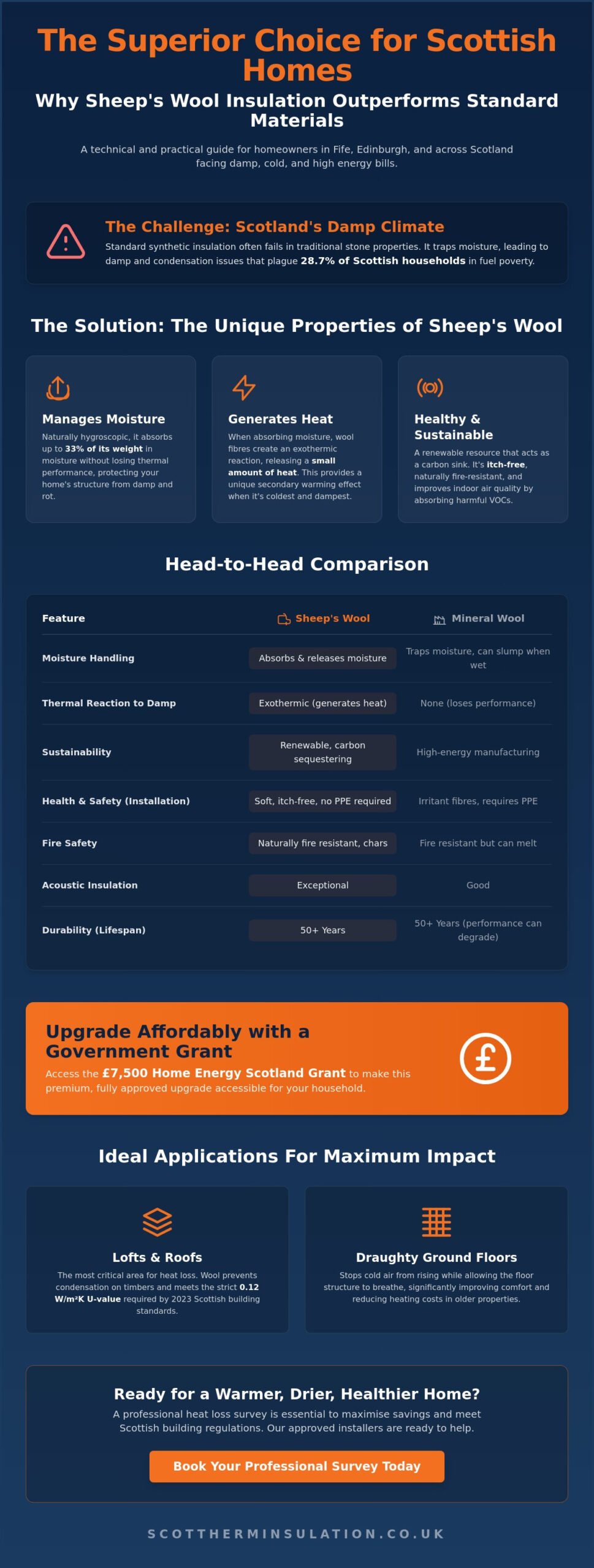
Choosing between synthetic and natural materials often comes down to long-term reliability. Whilst mineral wool is a common sight in lofts across Fife, its performance doesn’t always hold up over a 50-year lifespan. Wool insulation maintains its R-value (thermal resistance) far more consistently because it doesn’t suffer from the same structural degradation. Mineral wool is energy-intensive to produce, requiring temperatures exceeding 1,000°C to melt stone or glass. In contrast, sheep’s wool requires roughly 15% of that energy for processing. This makes it the superior choice for homeowners prioritising carbon reduction and long-term durability.
Installation also differs significantly in practical terms. Sheep’s wool is flexible and resilient. It can be easily friction-fitted amongst irregular joists and awkward corners in traditional Edinburgh tenements. It doesn’t require the heavy protective gear needed for glass wool, as there are no irritating particulates to breathe in. This ensures a precision fit every time, which is the foundation of our ‘Maximum Savings & Comfort’ promise. When materials are fitted correctly without gaps, the thermal envelope of your home remains intact for decades.
Performance in Damp Conditions
In coastal towns like North Berwick or Anstruther, sea air carries high levels of humidity. Standard mineral wool loses its insulating power when it becomes damp because water fills the air pockets that should be trapping heat. Sheep wool remains effective even when moist. Its thermal conductivity stays stable, whereas mineral wool’s performance can drop by as much as 50% if moisture levels rise. For a Scottish home, this stability is the difference between a warm winter and a drafty, expensive one.
Lifetime Cost and Value for Money
The initial investment in natural materials is higher, but the payoff is clear. Wool does not sag or slump over decades. Cheaper alternatives often settle, creating gaps where heat escapes. By maintaining its loft, wool ensures your home stays at the peak of its energy performance. This directly impacts your property value in the competitive Edinburgh market. Improving your energy efficiency is a proven way to boost your EPC rating, helping more households move into the target ‘C’ band or better. For a deeper look at how to optimise your property, see our Loft Insulation in Scotland guide.
Where to Use Wool Insulation in Your Scottish Property
Scottish homes aren’t a one-size-fits-all category. From high-ceilinged Edinburgh tenements to low-slung Fife cottages, the versatility of wool insulation makes it a perfect fit for diverse architectural styles. It’s particularly effective for internal wall insulation in solid stone properties. These buildings often suffer when modern, non-breathable materials are applied, but wool works in harmony with the stone. It allows moisture to pass through naturally, preventing the damp patches that often appear in traditional builds. This ensures the structural integrity of your home whilst providing the maximum savings and comfort you expect from a premium installation.
Many Victorian and Edwardian homes in the Central Belt feature room-in-roof designs. These spaces are notoriously difficult to heat because of their sloping ceilings and thin walls. The flexible nature of sheep’s wool allows it to be tucked into these awkward ashlar walls and rafters without leaving the cold spots that cause drafts. It provides a snug, high-performance thermal envelope that transforms a formerly chilly attic room into a cozy, usable living space. Whether you’re renovating a historic property or upgrading a modern build, this material adapts to the specific contours of your house.
Insulating Lofts and Attic Spaces
Standard lofts remain the primary source of heat loss in most Scottish households. To meet the technical requirements of the 2023 Building Standards, we typically install a total thickness of 270mm. This is achieved by cross-layering the wool across the joists to eliminate thermal bridging. It’s vital to maintain clear ventilation at the eaves to prevent stagnant air from building up. If you’re unsure how much material your attic needs, you can find expert guidance through our Insulation Services Near Me page.
Underfloor Solutions for Cold Floors
Drafty ground floors in Fife cottages are a major source of discomfort during the winter months. Fitting wool between the floor joists stops the “river of cold air” that often flows beneath the floorboards. Because the material is breathable, it protects against the risk of joist rot, which is a common issue in older timber-framed floors. This application is essential for creating a healthier indoor environment. You can refer to our Under Floor Insulation guide for more technical details on this process.
Ready to secure your home against the Scottish winter? Contact our specialist team today to schedule a site survey and discover the best application for your property.
Professional Wool Insulation Installation in Edinburgh and Fife
The transition to a more efficient home begins with a detailed assessment of your property’s thermal envelope. Whilst high-quality wool insulation offers incredible natural benefits, its effectiveness relies entirely on the precision of the fit. ScotTherm Insulation conducts professional surveys to identify the specific heat loss hotspots that generic DIY approaches often miss. We use thermal analysis to pinpoint exactly where drafts enter and where heat escapes, ensuring that every roll of material is placed to deliver maximum savings and comfort. This technical proficiency is what distinguishes a professional installation from a simple home improvement project.
Choosing fully approved contractors provides a level of security that off-the-shelf solutions cannot match. ScotTherm Insulation takes pride in its proven track record across the Central Belt, where we’ve helped households combat the high fuel poverty rates currently affecting our communities. If you’re looking to fund your upgrade at no cost, the ECO4 Scotland scheme offers 100% funded insulation upgrades for eligible households across the country. Our installers are trained to handle the complexities of traditional Scottish architecture, ensuring that the breathability factors discussed earlier are maintained through proper ventilation and gap-free fitting. This professional approach guarantees that your investment meets the 2023 building standards from day one, providing peace of mind for decades to come.
Why Choose a Local Scottish Installer?
Local knowledge is indispensable when dealing with the unique weather patterns of the East Coast. The team at ScotTherm Insulation understands how the damp sea air from North Berwick to the Fife coast affects building materials over time. We have extensive experience with local property types, from the thick stone walls of Edinburgh tenements to the timber-framed cottages of rural Fife. This regional expertise ensures that your wool insulation installation complies with all Scottish building regulations whilst benefiting from local accountability and dedicated customer support.
Get Started with a Free Home Inspection
Our process is designed to be straightforward and transparent. It starts with a comprehensive home inspection where we evaluate your current insulation levels and identify opportunities for improvement. ScotTherm Insulation is committed to using eco-friendly materials and sustainable practices that support the Scottish environment. Once the survey is complete, our fully approved team manages the entire fitting process, leaving you with a warmer, healthier home. Book your free insulation survey with ScotTherm Insulation today to take the first step towards a more sustainable future.
Secure Your Home’s Future with Natural Insulation
Investing in the right materials today secures the comfort of your household for decades to come. As we have discussed, the unique ability of wool insulation to manage moisture and maintain thermal stability makes it the only logical choice for the traditional and modern homes of Edinburgh and Fife. By choosing a natural solution that works with the Scottish climate rather than against it, you protect your building’s fabric whilst significantly lowering your environmental footprint.
ScotTherm Insulation brings the technical expertise and regional accountability necessary to ensure your project is a success. Our fully approved team is dedicated to providing the high-standard fitting required to achieve maximum savings and comfort in every property. We understand the nuances of local architecture and the specific challenges posed by our coastal weather, ensuring your home remains a sanctuary of warmth.
Take the next step toward a warmer, more sustainable future. Request your free wool insulation quote from ScotTherm Insulation today and discover how our specialist team can transform your home’s energy performance. We look forward to helping you create a healthier, more cost-effective living environment.
Frequently Asked Questions
Does sheep wool insulation smell like sheep?
No, professional-grade sheep wool insulation doesn’t have a detectable odour once it’s installed. The raw wool undergoes a rigorous scouring process to remove lanolin and organic impurities before it’s manufactured into batts or rolls. This ensures the material is clean and neutral; it won’t affect the indoor air quality or scent of your home.
Is wool insulation more expensive than standard glass wool?
Yes, the initial purchase price for natural wool is typically higher than standard glass or mineral wool alternatives. However, this investment covers its superior longevity and moisture management. When you consider that it maintains its thermal performance for over 50 years without sagging, the lifetime value far outweighs the upfront cost, especially in damp Scottish climates.
How do you prevent moths from damaging wool insulation?
We prevent moth damage by using wool insulation that’s been treated with non-toxic, salt-based binders or Thorlan IW. These treatments are applied during the manufacturing process and bond to the fibres at a molecular level. This ensures the protection is permanent and won’t off-gas or wash out, keeping your home safe from pests for the building’s entire lifespan.
Can I install wool insulation myself in my loft?
You can install it yourself, but professional fitting is recommended to ensure your home meets the specific thermal standards required in Scotland. Our fully approved installers use precision techniques to eliminate gaps and thermal bridging. This professional touch is essential for achieving the maximum savings and comfort promised by high-performance natural materials.
Is wool insulation fireproof and safe for my home?
Sheep wool is naturally fire-resistant and is one of the safest insulation materials available. It has a high ignition temperature of approximately 560°C and will typically char and self-extinguish rather than melt or contribute to a flame. It doesn’t release toxic fumes during a fire, providing an extra layer of security for your family.
How long does sheep wool insulation last?
High-quality wool insulation is designed to last the entire lifetime of the building, often exceeding 50 years. Unlike synthetic materials that can settle and lose their loft over time, wool fibres are naturally resilient and maintain their structure. This durability ensures that your energy efficiency remains consistent from the day of installation.
Does wool insulation work for soundproofing between floors?
Yes, wool is an exceptional material for soundproofing because of its high density and complex fibre structure. It has a high Noise Reduction Coefficient (NRC) of up to 1.05, which is significantly better than many synthetic alternatives. This makes it ideal for reducing impact noise between floors in busy Edinburgh flats or multi-storey homes.
What thickness of wool insulation do I need for a loft in Scotland?
To comply with the Building Standards Technical Handbook 2022, which came into force on February 1, 2023, you generally need a thickness of 270mm to 300mm in your loft. This depth ensures you achieve the target U-value of 0.12 W/m²K. Our specialists can measure your current levels during a survey to determine exactly how much additional material is required.