
Did you know that up to 25% of your home’s heat is currently escaping straight through an uninsulated roof? In a city defined by its persistent damp and biting winter chill, watching your hard-earned money vanish into the grey Glasgow sky is a frustrating reality. You deserve a home that remains warm without a staggering monthly energy bill, yet finding reliable loft insulation installers Glasgow homeowners can trust often feels like a minefield of complex grant criteria and technical jargon. It is natural to worry about poor ventilation or choosing a contractor who does not understand the unique needs of Scottish tenements and modern builds alike.
This 2026 guide simplifies your path to a more efficient household. You will discover how to navigate the latest ECO4 and Home Energy Scotland funding, select the right breathable materials for our local climate, and ensure your installation meets the highest professional standards. We will examine the benefits of specialist solutions like sheep’s wool and mineral wool, providing you with a clear roadmap to slash your heating costs and secure a dryer, more comfortable living environment for your family.
Key Takeaways
- Learn why 25% of your home’s heat escapes through the roof and how a specialist approach combats Glasgow’s unique humidity.
- Discover the benefits of breathable materials like sheep’s wool and mineral wool for maintaining the structural health of older properties.
- Find out how to verify the credentials of loft insulation installers glasgow homeowners rely on for high-quality, certified workmanship.
- Navigate the 2026 eligibility criteria for ECO4 and Home Energy Scotland grants to potentially fund your energy-saving upgrades.
- Prepare for a professional installation by understanding the survey process and how to maintain loft storage space without compromising efficiency.
Why Glasgow Homeowners Need Specialist Loft Insulation Installers
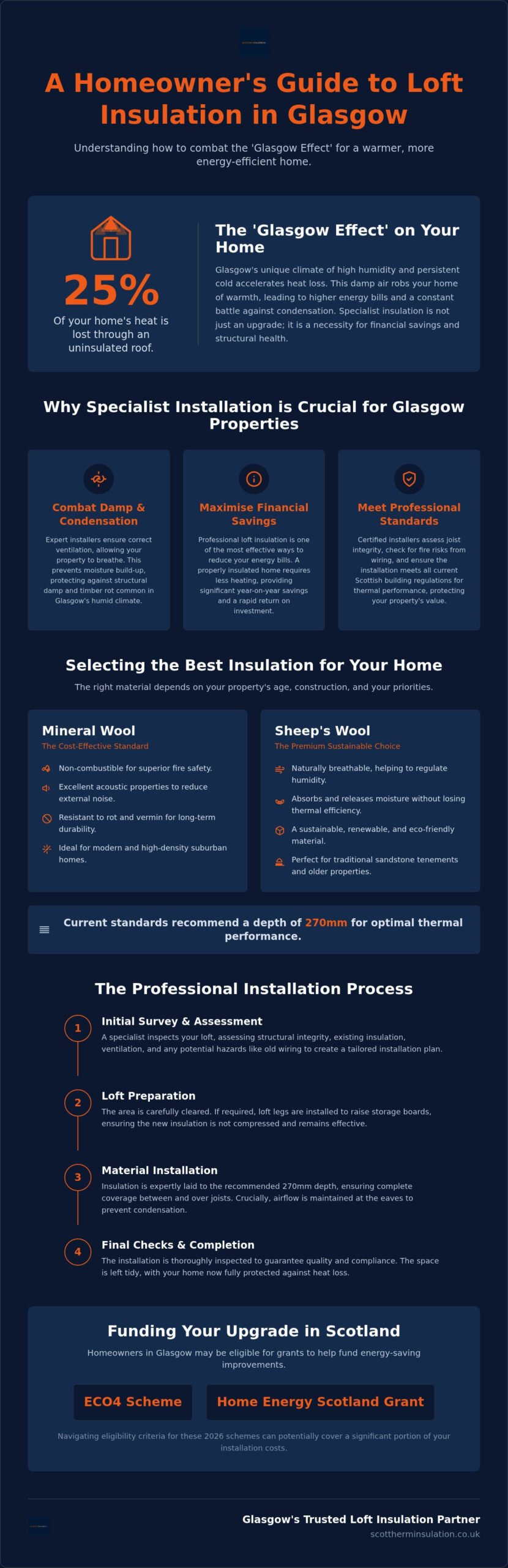
Glasgow’s weather is notoriously demanding. If your home lacks adequate protection, 25% of your heating energy escapes directly through the roof. This isn’t just a technical statistic; it’s a financial drain that impacts thousands of households across the city. Specialist loft insulation installers glasgow residents hire understand that local conditions require more than just a standard approach. The combination of high humidity and low temperatures, often called the ‘Glasgow Effect’ on domestic energy, means that heat loss is accelerated by the damp air surrounding our buildings.
Regional expertise is vital because Scottish building standards account for these extreme conditions. A professional installer provides a service that goes far beyond simply laying down rolls of material. They assess the structural integrity of your joists, identify potential fire risks from old wiring, and ensure that the installation meets current legal requirements for thermal performance. This level of scrutiny protects your property from the risks associated with poor workmanship, such as compressed materials that lose their effectiveness over time.
The Financial Impact of Rising Energy Costs in the Central Belt
Living in the Central Belt brings specific economic challenges. Energy bills remain a primary concern for homeowners, yet professional loft insulation offers one of the most effective ways to reclaim control over monthly outgoings. By upgrading to modern building insulation materials, a standard semi-detached home can significantly reduce its annual heating spend. While the initial investment is a consideration, the payback period is remarkably short because the savings begin the moment the work is finished. Many residents can also explore insulation grants in Scotland to help offset these costs, making the transition to a more efficient home much more accessible.
Combating Damp and Condensation in a Humid Climate
Glasgow’s housing stock, from traditional red sandstone tenements to post-war terraces, faces a constant battle with moisture. A common mistake made during DIY projects is ‘over-insulating’ without considering airflow. Simply blocking every gap can trap moisture, leading to structural dampness and timber rot. Expert loft insulation installers glasgow teams provide ensure that every project includes a robust ventilation strategy. They maintain essential cross-ventilation at the eaves, allowing the building to breathe whilst keeping the living spaces warm. This technical balance protects the integrity of your property and directly improves family well-being by providing a dry, thermally stable environment throughout the harsh Scottish winter.
Selecting the Best Insulation Materials for Glasgow Properties
Choosing the correct material is a decision that dictates your property’s thermal health for decades. Professional loft insulation installers glasgow experts recommend specific materials based on the age and construction of your home. Whether you live in a traditional sandstone tenement or a modern villa, the material must provide a barrier against heat loss whilst allowing the structure to remain dry. High-performance materials are selected for their durability and fire safety ratings, ensuring they won’t degrade over time or pose a risk to your household.
Current 2026 standards focus heavily on achieving a specific U-value, typically requiring a depth of 270mm for standard quilt materials. This depth provides the thermal resistance needed to combat the damp Scottish climate. For a detailed breakdown of how these materials compare across different property types, the Energy Saving Trust guide provides an excellent benchmark for homeowners. Professionals ensure that the chosen material is installed without gaps; this is essential for maintaining a consistent thermal envelope.
Mineral Wool: The Cost-Effective Standard
Mineral wool is a versatile, non-combustible glass or stone fibre solution that remains the industry standard for most modern suburban homes. It is particularly effective for Glasgow’s high-density residential areas because of its superior acoustic properties. By dampening external noise, it creates a quieter, more peaceful domestic environment. This material is resistant to vermin and rot, providing a reliable, long-term solution for homeowners who want to balance cost with high thermal performance. It fits snugly between standard joists, making it a functional choice for rapid, effective installation.
Sustainable Sheep’s Wool: The Premium Scottish Choice
For many traditional Glasgow properties, wool insulation is the superior choice due to its natural moisture regulation. Sheep’s wool is unique because it can absorb up to 33% of its weight in moisture without losing its thermal warmth. This breathability is vital for protecting the timber rafters found in older tenements. Beyond heat retention, sheep’s wool filters harmful chemicals such as formaldehyde from the air, contributing to a healthier indoor climate. It is a renewable, eco-friendly resource that aligns with modern sustainability goals. If you are considering an upgrade to a more natural solution, you can consult with our team to see if wool is the right fit for your rafters.
The Installation Process: What to Expect from Glasgow Fitters
A successful upgrade requires more than just unrolling material. Experienced loft insulation installers glasgow residents trust follow a structured, safety-first methodology. This begins with a comprehensive survey to identify any existing dampness or faulty wiring that could be hidden beneath old insulation. Specialists also measure your current levels to determine exactly how much top-up is required to meet modern standards. This ensures the finished project provides the maximum thermal benefit without wasting resources.
Preparation is the next critical phase. This involves clearing the workspace and protecting any light fittings or cables to prevent overheating. The chosen material is then laid to the recommended 270mm depth. This structured approach aligns with the wider objectives of the Warmer Homes Scotland scheme, which prioritises high-quality retrofits to ensure properties are cheaper to heat and more comfortable to live in. By following these government-backed standards, professional fitters guarantee a result that lasts for the lifetime of the building.
The final stage focuses on the details that prevent cold spots. We insulate the loft hatch and install draught seals to stop cold air from leaking into the hallway. Crucially, the installation must ensure that eaves ventilation is never blocked. This maintains a healthy airflow through the roof space, preventing the condensation issues that often plague Scottish homes during the winter months. A professional finish means every corner of the attic is covered, leaving no gaps for heat to escape.
Special Considerations for Glasgow Tenements
Traditional red and blond sandstone tenements present specific logistical challenges. Access often involves navigating narrow hatches located in high hallway ceilings. Professional teams are skilled at working within these restricted spaces whilst coordinating with other residents in shared attic environments. They pay particular attention to maintaining fire breaks between neighbouring properties, a vital safety requirement in shared roof structures that many general contractors overlook. This regional expertise ensures that the character of the building is preserved whilst its efficiency is modernised.
Maintaining Storage Space with Loft Boarding
Many homeowners worry that adding insulation means losing their storage space. It’s a common mistake to lay heavy boxes directly onto new insulation, which squashes the fibres and ruins their thermal efficiency. To prevent this, specialists use raised loft legs to create a sturdy platform for boarding. This elevated system sits above the 270mm insulation layer, allowing the material to perform at its peak whilst providing a safe area for your belongings. Using this professional method preserves your warranty and ensures the long-term performance of the installation.
Accessing ECO4 and Insulation Grants in Glasgow
Reducing your energy bills doesn’t always require a significant personal investment. For many residents, the path to a warmer home is paved by the ECO4 Scotland funding initiative. This scheme specifically targets households that are most vulnerable to the rising costs of heating, offering 100% funded insulation that covers both the high-quality materials and the professional installation costs. By working with certified loft insulation installers glasgow homeowners can transform their properties without the burden of upfront fees.
Eligibility for these grants is typically determined by several factors, including the receipt of certain income-based benefits, living in an area defined by fuel poverty, or owning a property with a low Energy Performance Certificate (EPC) rating. Home Energy Scotland acts as a key resource for Glasgow residents, providing clear guidance on which schemes are currently active in the city. They help bridge the gap between homeowners and the funding required to make essential thermal improvements.
How to Apply for Funding in 2026
The application process is straightforward when you partner with an approved Glasgow installer. First, you must organise an initial assessment to confirm your property’s current insulation levels and EPC rating. You will need to prepare specific documents, including proof of address and details of any qualifying benefits. ECO4 is a UK government scheme delivered by energy suppliers to reduce carbon emissions. Once your eligibility is confirmed, the installer manages the technical survey and the subsequent fitting process, ensuring all work meets the rigorous standards required by the funding providers. This professional oversight guarantees that the energy-saving measures are installed correctly and safely.
Grants for Landlords and Private Tenants
Glasgow’s private rental sector is subject to increasingly strict energy efficiency regulations. Landlords have a responsibility to ensure their properties meet minimum EPC standards, and funded loft insulation is one of the most cost-effective ways to achieve this. These improvements not only increase the property’s value but also make it more attractive to tenants who are wary of high running costs. Tenants living in the Central Belt also have rights regarding the energy efficiency of their homes. If you are a private tenant, you may be eligible for funding to upgrade your loft space, provided you have the landlord’s permission. This collaborative approach helps reduce the carbon footprint of Glasgow’s older housing stock whilst protecting residents from seasonal price hikes. To get started, you can verify your grant eligibility through our specialist team.
Why ScotTherm Insulation is Glasgow’s Trusted Loft Insulation Partner
ScotTherm Insulation stands as a dedicated specialist for the Central Belt, offering a level of regional insight that general contractors cannot match. From the high-ceilinged tenements of the West End to the modern villas of the South Side, our team understands the specific architectural nuances of Glasgow’s housing stock. As leading loft insulation installers glasgow residents depend on, we prioritise the long-term structural health of your property alongside immediate thermal performance. We don’t dilute our expertise with unrelated services; instead, ScotTherm Insulation focuses exclusively on perfecting the thermal envelope of your home to ensure maximum efficiency.
Our ‘whole house’ approach ensures that loft insulation in Scotland works in harmony with your building’s existing ventilation and structural requirements. We remain committed to using high-performance, sustainable materials such as sheep’s wool, which offers the natural breathability essential for our humid climate. By selecting ScotTherm Insulation, you are choosing a partner that values safety, regional accountability, and environmental responsibility. We understand that a warmer home is a more comfortable home, and we apply our technical proficiency to deliver that result for every client.
Our Commitment to Quality and Certification
Safety and reliability are the cornerstones of our service. ScotTherm Insulation adheres to the latest industry standards and safety protocols, ensuring that every installation is fire-safe and structurally sound. The peace of mind that comes from a verified, professional installation team is invaluable, especially when navigating the complexities of older Glasgow properties. We organise every aspect of the project, from the initial technical survey to the final sign-off, providing a seamless experience that prioritises your domestic well-being. Our disciplined approach to quality control means that every promise of energy efficiency is backed by certified workmanship.
Get Your Free Glasgow Insulation Survey Today
Taking the first step toward a warmer, more cost-effective home is simple. ScotTherm Insulation offers a no-obligation assessment for properties across Glasgow, allowing you to understand why we are the loft insulation installers glasgow homeowners recommend for technical precision. Our specialists will identify potential savings, check your eligibility for current grants, and recommend the most suitable materials for your property type. Don’t let another winter pass with rising energy costs and cold spots. Contact ScotTherm Insulation for your professional loft insulation survey and discover how our local expertise can transform your home’s comfort and value.
Secure a Warmer, More Efficient Glasgow Home
Upgrading your property’s thermal performance is one of the most effective ways to combat rising energy costs and protect your home’s structural integrity. By choosing specialist loft insulation installers glasgow residents trust, you ensure that every material used, from breathable sheep’s wool to durable mineral wool, is installed with precision. This professional approach maintains essential ventilation whilst preventing up to 25% of your household heat from escaping through the roof.
Remember that funding through the ECO4 Scotland initiative remains a powerful resource for eligible households, potentially covering the entire cost of your upgrade. Whether you live in a traditional tenement or a modern suburban build, the right insulation strategy delivers lasting financial and physical comfort. It’s time to move away from the damp and cold of the past and invest in a future of domestic well-being and reduced outgoings.
Book your expert loft insulation survey in Glasgow today. Our local team is ready to help you navigate grants and technical specifications to ensure your home stays warm for years to come.
Frequently Asked Questions
How much does loft insulation cost in Glasgow?
The cost of loft insulation depends on your property’s dimensions, the existing insulation levels, and your preferred material. Larger detached homes naturally require more resources than smaller terrace properties. Choosing premium sustainable materials like sheep’s wool will also influence the total investment compared to standard mineral wool options. We recommend a professional survey to get an accurate assessment for your specific roof structure.
Can I get free loft insulation in Glasgow through the ECO4 scheme?
Many Glasgow residents qualify for free insulation through the ECO4 scheme if they meet specific criteria. This government initiative focuses on households receiving certain benefits or those living in fuel poverty. Professional loft insulation installers glasgow teams can help you verify your eligibility and manage the application process from start to finish. This funding often covers both the materials and the full cost of the installation.
What is the best type of insulation for an old Glasgow tenement?
Sheep’s wool is the superior choice for traditional Glasgow tenements because of its natural breathability. These older sandstone buildings rely on moisture regulation to protect original timber rafters and joists. Sheep’s wool can absorb and release moisture without losing its thermal properties, making it ideal for the city’s humid climate. It provides a sustainable solution that works in harmony with historic building materials.
Will loft insulation cause damp or mould in my roof space?
Correctly installed insulation does not cause damp; it actually helps prevent it by stabilising indoor temperatures. Problems only arise if ventilation at the eaves is blocked by poorly laid material. Professional installers ensure that essential airflow is maintained throughout the roof space. This prevents the condensation that often forms on the underside of the roof when warm air meets a cold surface.
How long does it take for professional installers to finish a loft?
Most professional installations are completed within a single day. A standard three-bedroom semi-detached house typically takes between four and six hours to finish. This timeframe includes the initial preparation, the laying of the material to the correct depth, and the final sealing of the loft hatch. Our teams work efficiently to ensure minimal disruption to your daily routine.
Do I need to remove my old insulation before the new fitters arrive?
You don’t usually need to remove old insulation unless it is damp, damaged, or contaminated. In most cases, installers will simply “top up” your existing layers to reach the modern 270mm standard. If the old material is compressed or degraded, your installer will advise on whether a full removal is necessary during the initial technical survey. This ensures the new layer performs at its peak.
Can I still use my loft for storage after it has been insulated?
You can still use your loft for storage by installing a raised boarding system. Squashing insulation with heavy boxes reduces its thermal effectiveness, so installers use loft legs to create a sturdy platform above the material. This method preserves the thermal barrier whilst providing a safe, accessible area for your belongings. It’s an ideal way to maintain functionality without sacrificing energy savings.
What is the recommended depth for loft insulation in Scotland in 2026?
The current recommended depth for loft insulation in Scotland is 270mm for standard mineral or sheep’s wool materials. This thickness is required to meet 2026 building regulations and achieve the necessary U-value for maximum energy efficiency. Reaching this depth ensures your home stays warmer for longer and helps you achieve the highest possible savings on your annual heating bills.