
Could the yellowing material in your loft be the silent cause of your rising energy bills and respiratory irritation? Many homeowners across Scotland believe their attic is adequately protected, whilst they still face a constant battle against damp patches and musty smells on upstairs ceilings. It’s a common frustration to pay for heating that seems to vanish instantly. These issues often stem from the specific problems with old fibreglass insulation, which can lose its effectiveness and even trap moisture in our notoriously humid climate.
We understand that maintaining a healthy, energy-efficient home is your top priority. This article will help you discover the hidden health, structural, and financial risks associated with ageing glass wool and explain how to modernise your property for the specific demands of the Scottish weather. You’ll learn how to identify if your current setup has failed and explore the benefits of professional removal and replacement with superior, breathable materials. We also provide a clear look at the 2026 Scottish Building Standards to ensure your home remains compliant and cosy for the future.
Key Takeaways
- Learn why ageing glass wool loses its thermal performance through “slumping” and how this process creates hidden cold spots in your home.
- Identify the primary problems with old fibreglass insulation, ranging from respiratory irritation to the “moisture trap” effect that can lead to structural timber rot.
- Compare traditional materials with modern, breathable alternatives like sheep’s wool to see which provides the best protection for the Scottish climate.
- Follow a simple step-by-step guide to assess your loft’s condition and determine if your insulation meets the current 270mm depth standard.
- Understand the process for safe, professional removal and discover how the ECO4 scheme could help fund your home’s energy efficiency upgrade.
The Invisible Decay: What Happens to Fibreglass Insulation Over Time?
Fibreglass, often referred to as glass wool, has dominated the UK loft market for decades due to its low initial cost and fire-resistant properties. To understand the mechanism of this material, it helps to ask, What is Fibreglass Insulation? Essentially, it’s a collection of extremely fine glass fibres that trap small pockets of air to slow down the transfer of heat. Whilst this works well initially, glass wool has a limited effective lifespan in a domestic setting. In the damp, variable climate of Scotland, these fibres can lose their structural integrity much faster than homeowners realise. One of the most significant problems with old fibreglass insulation is that it doesn’t just sit there; it actively decays in performance as the years pass.
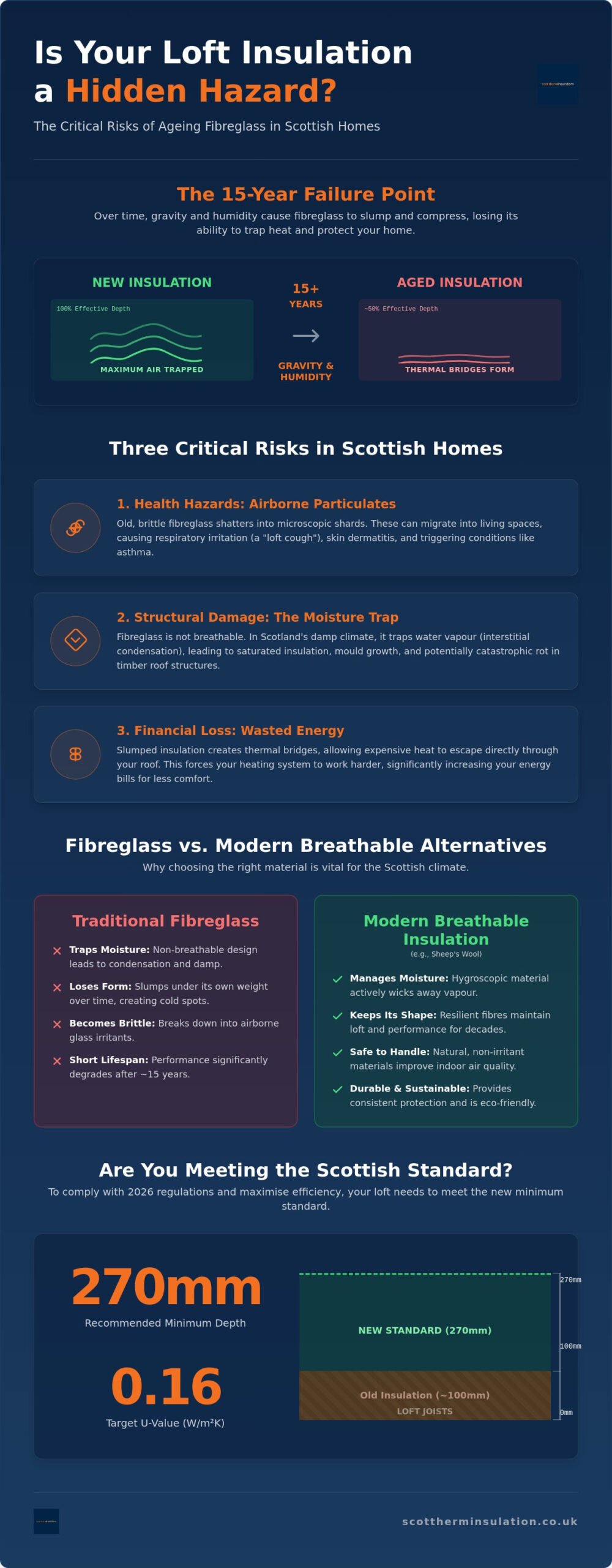
Gravity is the primary enemy of glass wool. Over time, the material suffers from a “slumping” effect, where the fibres settle and pull downwards. This creates thin patches or entirely bare spots at the top of rafters, forming what experts call thermal bridges. These bridges allow heat to bypass your insulation entirely, escaping through the roof and forcing your heating system to work twice as hard. By the time the Building (Scotland) Amendment Regulations 2025 take full effect on 6 April 2026, many older homes will find their existing insulation is no longer fit for purpose. Current standards recommend a depth of 270mm to achieve a U-value of 0.16 W/m²K, a target that old, settled material simply cannot reach.
The 15-Year Failure Point
Most fibreglass installed in the early 2000s is now functionally obsolete. As the material ages, it becomes brittle and loses the “loft” required to hold those crucial air pockets. When the material settles, it leads to a phenomenon known as thermal bypass. Thermal bypass is the movement of air through gaps in slumped insulation, which significantly reduces the home’s ability to retain heat. Once these air pockets are gone, the material is little more than a dusty layer of glass on your loft floor.
Compression and Performance Loss
Many Scottish families use their lofts for storage, often placing heavy boxes directly onto the insulation. This is a critical mistake. Crushing the fibres destroys their thermal resistance instantly. Think of it as the “duvet effect”; a thick, fluffy duvet keeps you warm because of the air trapped inside, but if you flatten it into a thin sheet, it loses its warmth. We strongly advise against “topping up” new material over old, compressed fibreglass. This often traps moisture between the layers, leading to deeper problems with old fibreglass insulation such as mould growth and timber decay.
Three Critical Risks of Retaining Aged Fibreglass in Scotland
Retaining degraded material in your loft does more than just inflate your energy bills. It introduces three distinct hazards that can compromise both your family’s health and the structural integrity of your property. The problems with old fibreglass insulation become particularly acute in the Scottish climate, where high humidity levels interact poorly with non-breathable mineral fibres. As this material ages, it physically breaks down, transforming from a protective barrier into a liability that affects the air you breathe and the wood that supports your roof.
Health Hazards and Airborne Particulates
Old fibreglass becomes incredibly brittle. Over decades, the glass filaments snap into microscopic shards that are easily disturbed by draughts or foot traffic. These particulates can migrate through tiny cracks in the ceiling, gaps around light fittings, or loft hatches, settling in bedrooms and living areas. Residents often report a persistent “loft cough” or unexplained skin dermatitis after spending time near the attic. For those living with asthma or bronchiectasis, these airborne glass splinters can be a significant trigger for respiratory distress. Professional handling is essential to prevent these fibres from contaminating your living space during any inspection or removal process.
The Scottish Damp Factor: Interstitial Condensation
Scotland’s weather presents a unique challenge for traditional glass wool. Because fibreglass is not “breathable” or hygroscopic, it cannot effectively manage moisture. In our high-humidity environment, water vapour often becomes trapped within the insulation layers, a process known as interstitial condensation. This leads to several issues:
- Structural Rot: Saturated fibreglass holds moisture directly against timber rafters, which can lead to wood rot and expensive structural repairs.
- Performance Collapse: When moisture fills the air pockets in the material, it loses R-value over time. In fact, even a small amount of moisture can cause a drastic drop in thermal resistance, rendering the material nearly useless.
- Bacterial Growth: A lingering “wet-dog smell” in your loft is a classic sign that your insulation is damp and harbouring bacteria or mould.
Beyond health and damp, old insulation is a magnet for pests. Rodents in Stirling and Perth frequently target aged glass wool as it provides the perfect soft, warm nesting material. Once infested, the insulation becomes contaminated with droppings and urine, further exacerbating the problems with old fibreglass insulation. From a financial perspective, a typical semi-detached home in central Scotland can lose up to 25% of its heat through an inadequately insulated roof. If your current loft setup is failing, you can consult a local specialist to identify the most effective, breathable replacement for your specific property type.
Fibreglass vs. Modern Alternatives: Why Breathability Matters
When evaluating how to address the problems with old fibreglass insulation, it’s essential to look beyond a simple like-for-like replacement. Modern building science has evolved, moving away from materials that merely act as a barrier toward those that actively manage the internal environment. Breathability is the defining factor for success in a Scottish home. Traditional glass wool is hydrophobic; it resists water but cannot absorb or release it. This leads to the moisture traps and timber rot discussed in previous sections. In contrast, modern alternatives are often hygroscopic. These materials can absorb significant amounts of water vapour without losing their thermal performance, releasing it safely when conditions dry out. This moisture management is vital for the longevity of your roof structure.
The choice of material impacts your home’s safety and environmental footprint. While old fibreglass is associated with various health risks of fiberglass exposure, including persistent skin and respiratory irritation, modern alternatives are far safer to handle. We compare the three primary options across four key metrics:
- Lifespan: Old fibreglass often fails after 15 years; mineral wool lasts 30 to 50 years, whilst sheep’s wool can remain effective for over five decades.
- Breathability: Fibreglass has zero moisture-handling capability, whereas sheep’s wool is highly breathable.
- Safety: Modern fibres are designed to be non-irritating and safer for household air quality.
- Eco-impact: Natural wool has a tiny carbon footprint compared to the energy-intensive melting process required to create glass fibres.
The Case for Sheep’s Wool in Scotland
For many homeowners, wool insulation is the gold standard, particularly for traditional stone properties. Sheep’s wool naturally regulates humidity. In the damp air of a coastal Fife village or a misty Perthshire glen, wool absorbs excess moisture and keeps roof timbers dry. It’s a sustainable choice that requires very little energy to produce. Additionally, its natural fire-retardant properties offer extra peace of mind for those living in high-density Edinburgh tenements.
Mineral Wool: The High-Performance Mid-Range
Modern mineral wool represents a significant upgrade over 1990s-era glass wool. It offers vastly improved acoustic insulation, which is a major benefit for properties in busy city centres like Perth or Stirling. Unlike the brittle problems with old fibreglass insulation, modern mineral wool maintains its structural integrity and R-value for much longer. It carries excellent fire safety ratings and provides a durable, cost-effective solution for homes that require high thermal resistance without the premium cost of natural fibres.
Step-by-Step: How to Identify and Assess Your Loft’s Condition
Assessing your loft doesn’t require complex machinery; it begins with a simple visual inspection. When you enter the space, pay close attention to the colour and texture of the material. New fibreglass is typically bright yellow or pink, but as it decays, it takes on a dull grey or dark mustard appearance. This shift in colour often indicates that the fibres have become saturated with dust and moisture, which are primary problems with old fibreglass insulation. If the material looks flattened or “felted” rather than fluffy, it has likely lost the air pockets necessary to retain heat.
The next step is to measure the depth of your existing material. Take a ruler and check several points across the loft floor. By 2026, the recommended depth for loft insulation in Scotland is 270mm to meet current energy efficiency standards and achieve a U-value of 0.16 W/m²K. If your material measures significantly less, or if it has been crushed by storage boxes, you’re likely losing a substantial portion of your home’s heat through the roof. Use your senses as well; a musty, earthy odour is a clear warning sign of dampness and potential mould growth amongst the fibres.
The ‘Cold Spot’ Audit
You can use a simple digital thermometer to identify where insulation has failed or shifted. On a cold day, check the temperature of the ceiling in different rooms. Pay particular attention to the corners of the ceiling and areas around the loft hatch or recessed lighting. These are common sites for thermal bridging, where heat escapes through gaps in the insulation. If you notice “slumping” at the eaves, where the material has pulled away from the wall plate, this is likely the cause of the cold spots and mould patches often found in the corners of upstairs bedrooms.
When to Call a Professional
Whilst a visual check is a great starting point, certain red flags require expert intervention. If you see dark stains or “tide marks” on the rafters, the damp has already started affecting the structural timber. Finding rodent droppings or nesting materials amongst the glass wool is another sign that the insulation is contaminated and needs replacement. Finally, remember that DIY removal of old glass wool is hazardous. Brittle fibres break into skin-irritating shards that require industrial-grade PPE and specialist vacuum equipment to handle safely. If you’re unsure about the state of your attic, you can book a professional loft audit to receive an expert assessment of your home’s thermal health.
Professional Removal and Funding Your Upgrade in 2026
Addressing the various problems with old fibreglass insulation requires more than just laying new rolls on top of the old ones. At ScotTherm Insulation, we prioritise a comprehensive restoration of your loft’s thermal integrity. Our process begins with the safe, dust-controlled removal of decayed glass wool. We understand the specific challenges of Scottish homes, from Edinburgh tenements to Stirling semi-detached houses. By removing the failing material entirely, we eliminate the health risks and moisture traps that have been compromising your property’s health for years. This professional approach ensures your home is ready for the higher performance standards required in 2026.
Modern insulation provides a tangible shield against the rising cost of living whilst improving the comfort of your daily life. With energy prices remaining a concern for many households, the long-term return on investment is significant. A modern, breathable system protects your structural timbers and pays for itself through reduced monthly outgoings. It’s the most effective way to secure your home against the damp Scottish winters and ensure your property remains a valuable, energy-efficient asset.
Safe Disposal and Preparation
We utilise industrial-grade vacuum systems to ensure that no brittle fibres or particulates enter your living space during the extraction. Once the loft floor is clear, we perform a vital air-sealing process. This involves sealing gaps around pipes, cables, and light fittings to prevent warm air from leaking into the attic space. This preparation creates a clean slate for modern upgrades, whether you’re installing sheep’s wool or preparing for under floor insulation in other parts of your home. A clear, professionally prepared loft also allows for the safe installation of loft boarding, ensuring your storage needs don’t crush your new investment and recreate the problems with old fibreglass insulation.
Grants and Funding for Scottish Homeowners
Financing your home’s modernisation is more accessible than many realise. In 2026, several programmes exist to help Scottish homeowners offset the cost of energy efficiency improvements. The ECO4 Scotland scheme remains a primary route for funding, specifically targeting households that need to improve their EPC ratings. Eligibility for insulation grants in Scotland often depends on your property type and current heating system. Professional installation by a team like ScotTherm Insulation is often a requirement for government-backed funding. We can guide you through the application process to see if your property qualifies for a fully or partially funded upgrade.
Before your installer begins work, use this final checklist to ensure a quality result:
- Are they using breathable, hygroscopic materials suited for the Scottish climate?
- Do they have a clear plan for the safe disposal of hazardous old glass wool?
- Will they provide a certificate of installation that meets 2026 building standards?
- Have they included air-sealing and ventilation checks in their quote?
Secure Your Home’s Future and Thermal Comfort
Leaving the problems with old fibreglass insulation unaddressed leads to unnecessary financial strain and structural damage. As we have explored, the combination of material slumping and Scotland’s high humidity creates a moisture trap that threatens both your rafters and your family’s respiratory health. Upgrading to modern, breathable materials like sustainable sheep’s wool or high-performance mineral wool isn’t just a maintenance task; it’s an investment in the long-term well-being of your household. By meeting the 2026 standards today, you ensure your property remains warm, dry, and energy-efficient for decades to come.
As specialists in the unique demands of the Scottish climate, ScotTherm Insulation provides the expertise needed to navigate these technical upgrades. Our team are fully certified ECO4 installers, dedicated to helping you access available funding whilst ensuring a safe, dust-free removal of hazardous materials. Don’t let your heating budget vanish through an outdated roof. Book your specialist free insulation inspection with ScotTherm Insulation today and take the first step towards a healthier, more cost-effective home. We look forward to helping you create a space that is as resilient as it is comfortable.
Frequently Asked Questions
Is old fibreglass insulation dangerous to leave in my loft?
Old fibreglass can be hazardous if the fibres become brittle and airborne. Over time, these glass filaments break into microscopic shards that can irritate your skin, eyes, and respiratory system. If the material becomes damp, it may also harbour bacteria and mould, which compromises your home’s air quality. These problems with old fibreglass insulation mean that any inspection or removal should be handled by professionals using industrial-grade protective equipment.
How long does fibreglass insulation actually last in a Scottish climate?
In the humid Scottish climate, fibreglass typically reaches a failure point after 15 to 20 years. Whilst the material is theoretically durable, the reality of gravity and moisture causes it to “slump” and compress over time. Once the material loses its loft and thickness, it can no longer trap the air pockets required for thermal resistance. This degradation leads to a significant drop in your home’s ability to retain heat during the winter months.
Can I just put new insulation on top of my old fibreglass?
We generally advise against “topping up” over failing materials, especially if the existing layer is damp or compressed. Laying new rolls over the problems with old fibreglass insulation can trap moisture against your ceiling joists, which often leads to timber rot and mould growth. Removing the old material allows for a clean inspection of the loft floor and ensures that your new, high-performance insulation can perform at its maximum efficiency.
What are the signs that my loft insulation needs replacing?
Common indicators include a change in colour from bright yellow to a dull grey or dark mustard. You should also check for a musty “wet-dog” smell, damp patches on upstairs ceilings, or a depth measurement of less than 270mm. If your heating bills remain high despite the heating being on, it’s a strong sign that the material has settled and is no longer providing an effective thermal barrier for your property.
How much does it cost to remove and replace old insulation in Scotland?
The cost varies based on the size of your loft and your choice of replacement materials, such as mineral wool or sustainable sheep’s wool. Because every home is different, we provide tailored quotes following a professional survey. Many Scottish homeowners find that the long-term energy savings quickly offset the initial investment. You should also check your eligibility for government-backed funding, which can significantly reduce or even eliminate the cost of the upgrade.
Will new insulation help stop the damp and mould in my upstairs rooms?
Yes, a professional insulation upgrade is a primary defence against surface condensation and mould. By keeping your ceilings warm, you prevent water vapour from condensing on cold surfaces in your bedrooms and bathrooms. Using breathable materials like sheep’s wool further helps by naturally regulating humidity levels in the loft space. This prevents the moisture build-up that is so common with old, non-breathable glass wool systems.
Can I get a grant to replace my old, inefficient insulation?
Many Scottish households qualify for grants through the ECO4 scheme, which aims to improve the energy efficiency of homes with poor EPC ratings. This initiative can often cover the full cost of removing old materials and installing new, high-standard insulation. As certified ECO4 installers, ScotTherm Insulation can assess your property’s eligibility and help you navigate the application process to secure the funding you need for a warmer home.
Is sheep’s wool better than fibreglass for older homes in Edinburgh?
Sheep’s wool is often the superior choice for traditional stone properties in Edinburgh and across Scotland. Its hygroscopic nature allows it to absorb and release moisture without losing its insulating power, which is vital for protecting old rafters from rot. Unlike the problems with old fibreglass insulation, sheep’s wool is entirely sustainable, safer to handle, and provides excellent acoustic dampening for homes located in busy city centres.