
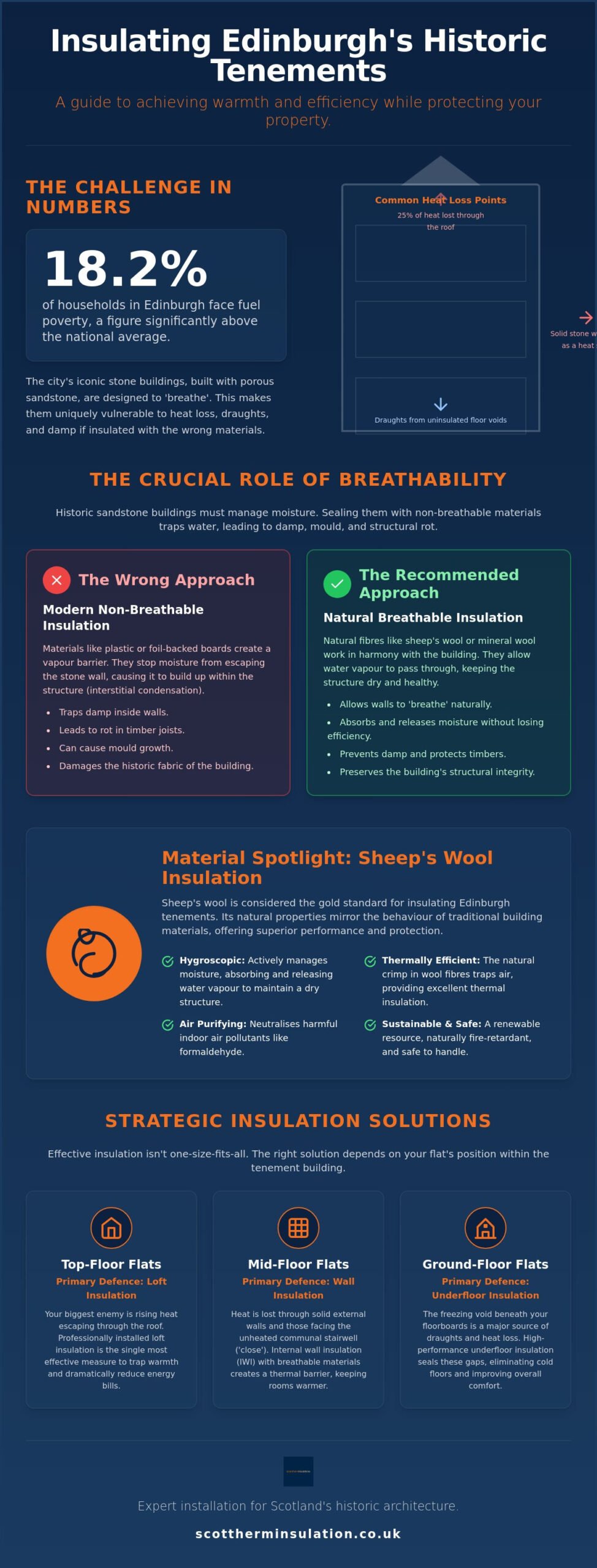
Did you know that 18.2% of households in Edinburgh are currently struggling with fuel poverty, a figure that sits significantly above the national average? For those living in the city’s iconic stone buildings, the winter months often mean choosing between astronomical energy bills and a constant, biting draught. If you reside on the top floor, choosing the correct loft insulation for tenement flats Edinburgh is the most vital step in securing your home against the cold. Many owners worry that modern interventions might trap moisture and cause rot in historic timbers; however, protecting your property’s fabric and your family’s comfort is entirely possible with the right approach.
You shouldn’t have to sacrifice the historic character of your home just to stay warm. We understand the unique challenges of solid stone walls and original floorboards that seem to invite the North Sea wind straight into your living room. This guide shows you how to achieve a high performance, energy-efficient home using breathable materials that respect Edinburgh’s heritage. We will preview the latest 2026 grant eligibility under the ECO4 scheme and explain how specialised solutions like sheep’s wool can lower your costs whilst keeping your tenement healthy for another century.
Key Takeaways
- Understand why breathable materials like sheep’s wool and mineral wool are the gold standard for protecting traditional sandstone from damp and rot.
- Discover the most effective methods for installing loft insulation for tenement flats edinburgh to prevent heat from escaping through the top of your building.
- Identify solutions for ground-floor draughts by sealing the freezing voids beneath your floorboards with high-performance underfloor insulation.
- Learn how to navigate Edinburgh’s conservation area regulations and manage heat loss through shared walls in the communal close.
- Find out how to access accredited installers who specialise in the unique thermal requirements of Scotland’s historic tenement architecture.
The Unique Challenge of Insulating Edinburgh Tenements
Edinburgh’s skyline is defined by its historic architecture, but living within these stone walls presents a specific set of thermal obstacles. To understand how to keep your home warm, you first need to understand what is a tenement building in terms of its physical construction. These properties were built using porous sandstone and lime mortar, materials designed to absorb and release moisture naturally. This “breathing” process is essential for the health of the building.
Modern plastic or foil-backed insulation boards often cause more harm than good in this environment. When you seal a traditional stone wall with non-breathable materials, you trap water vapour within the structure. This leads to interstitial condensation, where moisture collects behind the insulation and rots the original timber joists. For those seeking loft insulation for tenement flats edinburgh, choosing materials that allow for moisture movement is not just a preference; it’s a structural necessity. Using the wrong materials can turn a cold flat into a damp one very quickly.
Edinburgh’s coastal location exacerbates these issues. High winds from the Firth of Forth drive rain into the stone and force cold air through every microscopic gap in the masonry. This creates a constant cycle of damp and draughts that modern building standards rarely account for. The primary heat-loss culprits in these flats are usually the original floorboards, draughty sash windows, and the massive solid stone walls that act as a giant heat sink.
Why Traditional Buildings Behave Differently
Traditional buildings rely on a constant exchange of air and moisture to stay healthy. Breathability in a 19th-century stone wall is the capacity of the material to manage moisture by allowing water vapour to pass through the fabric without becoming trapped. Unlike modern cavity walls, tenement flats share heat through internal partitions. Thermal bridging often occurs where cold stone meets warm internal air, particularly around window lintels or where the floor joists meet the external wall. This creates cold spots where mould is likely to grow if the insulation isn’t handled correctly.
Assessing Your Flat’s Thermal Weak Points
Heat loss in a tenement isn’t uniform. If you’re on the top floor, loft insulation for tenement flats edinburgh is your primary defence against rising heat escaping through the roof. For ground-floor residents, the freezing void beneath the floorboards is the main culprit. You should also check for “heat bleed” into the communal stairwell, as these spaces are rarely heated and can suck warmth right out of your hallway. Common weak points include:
- Gaps between original floorboards that allow draughts from the cellar or crawl space.
- Single-glazed sash and case windows that lack modern weather-stripping.
- Uninsulated walls facing the unheated communal “close”.
Every flat has its own quirks. A professional survey identifies these specific weak points before you commit to a solution. This ensures you don’t spend money on measures that might actually damage your home’s historic fabric. We focus on identifying where the building is losing the most energy whilst ensuring the stone can still manage moisture as it was designed to do.
Choosing the Right Materials: Breathability and Performance
Selecting the correct material is the most critical decision you’ll make when upgrading a traditional home. As we established, the sandstone fabric of these buildings must manage moisture effectively. Using the wrong product can lead to trapped dampness and structural damage. High-performance wool insulation has emerged as the gold standard for Edinburgh tenements because it mirrors the building’s natural behaviour. Unlike synthetic alternatives, natural fibres can absorb and release moisture without losing their thermal efficiency. This capability is vital for maintaining the health of your walls whilst significantly reducing your energy consumption.
When installing loft insulation for tenement flats edinburgh, the goal is to stop heat from escaping through the “hat” of the building. You must also consider internal wall insulation (IWI) for those cold gable ends. Any system you choose should follow the guidance from Historic Environment Scotland regarding vapour permeability. We use vapour-permeable membranes in our solid wall systems to ensure that moisture doesn’t get trapped against the stone. Technical precision like this protects your property’s value and ensures a much healthier indoor environment for your family.
The Benefits of Sustainable Sheep’s Wool
Sheep’s wool is a powerhouse for traditional Scottish properties. It possesses unique moisture-regulating properties that actively protect your original timber joists from the rot often caused by condensation. Beyond thermal gains, it provides superior acoustic insulation. This is essential for shared tenement living, as it dampens the sound of footsteps and voices from neighbouring flats. Choosing this material also supports Scotland’s Net Zero goals by using a renewable, low-carbon resource that performs for decades. If you are ready to improve your home’s comfort, our specialists at ScotTherm Insulation can help you choose the right natural fibre solution.
Mineral Wool: A Versatile Alternative
Mineral wool offers a highly effective and cost-efficient alternative for many residents. It provides excellent fire resistance, which is a major priority for high-density tenement blocks. This material integrates seamlessly with modern IWI systems, making it a practical choice for large-scale internal wall projects. It remains breathable whilst offering a high degree of thermal resistance. When combined with professional installation, mineral wool ensures that your home stays warm during the harshest Edinburgh winters without the risk of moisture build-up. It represents a balanced intersection of performance, safety, and financial efficiency for the modern homeowner.
Strategic Insulation for Different Flat Levels
Edinburgh’s housing stock is uniquely vertical. With 58% of the city’s dwellings classified as flats, your thermal strategy depends entirely on which floor you occupy. A ground-floor flat faces a completely different set of challenges than a property tucked under the rafters. Whilst middle-floor residents often benefit from the “sandwich effect” of being heated from above and below, they still face significant heat loss through solid external walls and unheated communal stairwells. Following Home Energy Scotland efficiency tips can help you identify these specific vulnerabilities based on your flat’s position.
If you live on the top floor, you occupy the most vulnerable position in the building. Heat naturally rises, and without adequate protection, it escapes straight through the roof. This makes loft insulation for tenement flats edinburgh the single most effective upgrade for top-floor residents. For those on the ground floor, the priority shifts to the crawl space. Installing high-quality under floor insulation is the only way to stop the relentless rising cold that makes stone-built tenements feel like ice boxes during the winter months.
Stopping the Chill from Below
Ground-floor tenements sit above a ventilated void that is often damp and freezing. This cold air pulls heat through the floorboards, making the flat nearly impossible to keep warm. We install insulation between the original timber joists, securing it with breathable membranes and netting. This method allows us to treat the floor without the need to lift every single board, which preserves your historic flooring. Maintaining sub-floor ventilation is vital; we ensure that airbricks remain clear to prevent moisture build-up and protect your joists from timber decay.
Top-Floor and Attic Flat Solutions
For residents in converted attic spaces, Room in Roof insulation provides a specialised solution that follows the pitch of the ceiling. This ensures every corner of the living space is protected. If you have a traditional loft space, securing the “hat” of the building with loft insulation scotland can lead to substantial savings. It’s worth checking your eligibility for eco4 scotland funding, which is active until March 2026. This scheme often prioritises top-floor measures, especially for households with an EPC rating of D or below. In Edinburgh, the LA Flex route even allows households with an income under £31,000 to qualify for these improvements. We also offer loft boarding solutions that allow you to maintain valuable storage space whilst ensuring the insulation reaches the recommended depths for maximum thermal performance.
Navigating Planning, Conservation, and The Close
Edinburgh’s UNESCO World Heritage status and its 50 conservation areas create a complex regulatory environment for homeowners. If you are planning loft insulation for tenement flats edinburgh, you must understand how these designations affect your project. Generally, internal improvements are permitted without planning permission. However, the city’s strict rules mean that any alteration must respect the historic fabric of the building. This is particularly true in areas like the New Town or the Southside, where the preservation of original features is a priority for the local council.
The communal stairwell, or “close,” acts as a thermal chimney that pulls heat directly from your living space. Shared walls between your flat and the stairwell are rarely insulated in traditional buildings. This leads to “heat bleed,” where your expensive warmth escapes into the unheated communal space. Treating these walls internally is an effective way to secure your home’s thermal boundary. You don’t usually need communal permission for internal work within your own property, making this a fast way to see a reduction in your energy bills.
Preserving original features like ornate plaster cornices or timber shutters is a primary concern. When we install internal wall insulation, we use specialised techniques to ensure these features remain visible and undamaged. This often involves using thinner, high-performance materials around decorative areas whilst maintaining maximum depth on flat wall surfaces. This approach ensures your flat remains warm without losing the aesthetic charm that defines Edinburgh’s historic architecture.
Conservation and Listed Buildings
If your property is a Listed Building, you will likely require Listed Building Consent (LBC) from the City of Edinburgh Council for any insulation work that alters the interior. In protected areas, external cladding is almost never an option. Internal wall insulation is the preferred route for local planners because it preserves the iconic sandstone facade. Balancing energy efficiency with historic preservation requires a specialist touch. We ensure all materials used are vapour-permeable to comply with the best practices for traditional stone buildings.
Communal Considerations
Some improvements require a collective approach from everyone in the building. Draughts from the communal front door or heat loss through a damaged roof cupola affect every resident in the stairwell. You can often organise collective insulation projects with your neighbours to share costs and improve the building’s overall energy rating. Liaising with your factor or residents’ association is the first step toward communal energy upgrades. For individual flats, you can still proceed with internal measures like floor or loft insulation independently to secure your own comfort. If you need expert advice on navigating these regulations, contact the specialists at ScotTherm Insulation to discuss your specific property requirements.
The ScotTherm Approach: Expert Installation in Edinburgh
Edinburgh’s tenements aren’t just buildings; they’re historic assets that require a specialised touch. Generic insulation advice often fails because it doesn’t account for the specific thermal behaviour of Scottish sandstone. At ScotTherm Insulation, we provide a service rooted in local expertise. When we install loft insulation for tenement flats edinburgh, we don’t just roll out material. We assess the airflow, the condition of the timber, and the specific needs of your flat’s position in the block to ensure the solution is technically sound.
Our commitment to breathable materials is non-negotiable. We avoid the quick plastic fixes that lead to moisture traps and structural rot. Instead, we specialise in sheep’s wool and mineral wool solutions that work with your home, not against it. This approach ensures your living space stays warm whilst the building’s fabric remains dry and healthy. Professional installation means respecting the historic character of your home while delivering modern thermal performance that lasts for decades.
The first step in our process is a detailed survey. We help you navigate the complex landscape of insulation grants scotland. With the ECO4 scheme active until March 2026, many Edinburgh residents can access significant funding for these improvements. If you don’t receive qualifying benefits, you might still be eligible through the LA Flex route. Our team handles the technical assessments required to verify your EPC rating and confirm which measures will provide the best return on investment for your monthly energy bills.
Trusted Local Specialists
We have a verified history of working within Edinburgh, Fife, and the Lothians. Our installers are accredited professionals who understand the nuances of Georgian and Victorian stone construction. We focus on long-term thermal health. This means we prioritise the physical ease of a warm home and the financial efficiency of reduced outgoings. You can trust that our recommendations are based on what is best for the building’s longevity and your personal comfort.
Next Steps for a Warmer Flat
Securing your home against the cold doesn’t have to be a daunting technical challenge. You can book a specialist free insulation inspection to understand exactly where your flat is losing heat. We will check your loft, floors, and walls to create a tailored energy-efficiency plan. We also verify if you qualify for Warmer Homes Scotland or other current funding schemes. Don’t let another winter pass in a draughty home. Contact ScotTherm Insulation for a professional tenement assessment today and discover how we can transform your living space into a warm, energy-efficient sanctuary.
Securing Your Tenement’s Thermal Future
Transforming a draughty tenement into a warm, energy-efficient sanctuary requires a careful balance of heritage preservation and technical performance. By choosing breathable materials like sheep’s wool, you protect the structural integrity of your property whilst significantly lowering your monthly energy outgoings. Whether you are tackling a freezing ground floor or looking for loft insulation for tenement flats edinburgh on the top floor, the right strategy ensures long-term comfort without the risk of damp or rot.
As accredited installers specialising in Edinburgh’s traditional building stock, we understand the nuances of stone construction and the importance of professional-grade moisture management. Our team is fully accredited under major Scottish energy schemes, ensuring that every installation provides both physical ease and financial efficiency. You don’t have to tolerate a cold home when sustainable, high-performance solutions are specifically designed for our city’s unique architecture.
Book Your Professional Tenement Insulation Survey Today to discover how we can help you achieve a warmer, more cost-effective living space. Let’s work together to preserve the historic character of your home while making it fit for the modern world.
Frequently Asked Questions
Can I insulate my Edinburgh tenement flat if it is in a conservation area?
Yes, you can insulate a flat in a conservation area, as internal energy efficiency measures typically do not require planning permission. The City of Edinburgh Council generally supports improvements that do not alter the building’s external appearance. If your property is a Listed Building, you will need to obtain Listed Building Consent before starting any work. We always recommend using materials that respect the historic character of the stone.
Does internal wall insulation cause damp in old stone buildings?
Internal wall insulation only causes damp if non-breathable materials like rigid foam boards are used. Traditional stone buildings must manage moisture naturally to stay healthy. By using vapour-permeable systems and natural fibres, you allow the wall to breathe. This prevents interstitial condensation, which is the primary cause of timber rot in older Scottish properties. Professional installation ensures your building stays dry and structurally sound.
Is underfloor insulation worth it for a ground-floor tenement flat?
Underfloor insulation is one of the most effective upgrades for ground-floor residents living above cold, ventilated voids. It stops the relentless rising chill that makes stone tenements feel significantly colder than their actual temperature. By insulating between the original floor joists, you create a thermal barrier that eliminates draughts. Most residents notice an immediate improvement in comfort and a reduction in the time it takes to heat their home.
How much money can I save on heating bills by insulating my flat?
Households in Edinburgh that receive energy improvements save an average of £620 per year on their heating bills. The exact figure depends on your flat’s position and the specific measures you choose. For instance, installing loft insulation for tenement flats edinburgh can pay for itself in just 2 to 4 years based on 2026 gas prices. These upgrades provide a permanent financial benefit whilst protecting you from future energy price spikes.
Which is better for an old flat: mineral wool or sheep’s wool?
Both materials are excellent for traditional buildings, but sheep’s wool is the premium choice for moisture regulation. It can absorb a significant amount of water vapour without losing its thermal performance, which protects your home’s timber. Mineral wool is a highly effective, cost-efficient alternative that offers superior fire resistance and breathability. Your choice will ultimately depend on your specific budget and the unique thermal requirements of your property.
Can I get a grant for insulating my tenement flat in Scotland in 2026?
Yes, several funding routes are available in 2026, including the ECO4 scheme and Warmer Homes Scotland. ECO4 provides energy improvements to eligible households, particularly those with an EPC rating of D or below. In Edinburgh, the LA Flex route allows households with an annual income under £31,000 to qualify for assistance. These grants are designed to help residents reduce carbon emissions and lower their monthly living costs.
How long does it take to install internal wall insulation in a standard flat?
A standard internal wall insulation project typically takes between 3 and 5 working days to complete. The exact duration depends on the size of the flat and the complexity of original features like cornices or timber shutters. Loft or underfloor projects are often even faster, frequently finished within just one or two days. We provide a structured timeline during your initial survey so you know exactly what to expect.
Do I need to move out of the flat during the insulation installation?
You do not need to move out of your home during the installation process. Our team works in a logical, room-by-room sequence to minimise disruption to your daily routine. Whilst there is some noise and dust associated with any professional home improvement, we use protective coverings and maintain a clean workspace. Most residents continue to live in their flats comfortably whilst the work is carried out.