
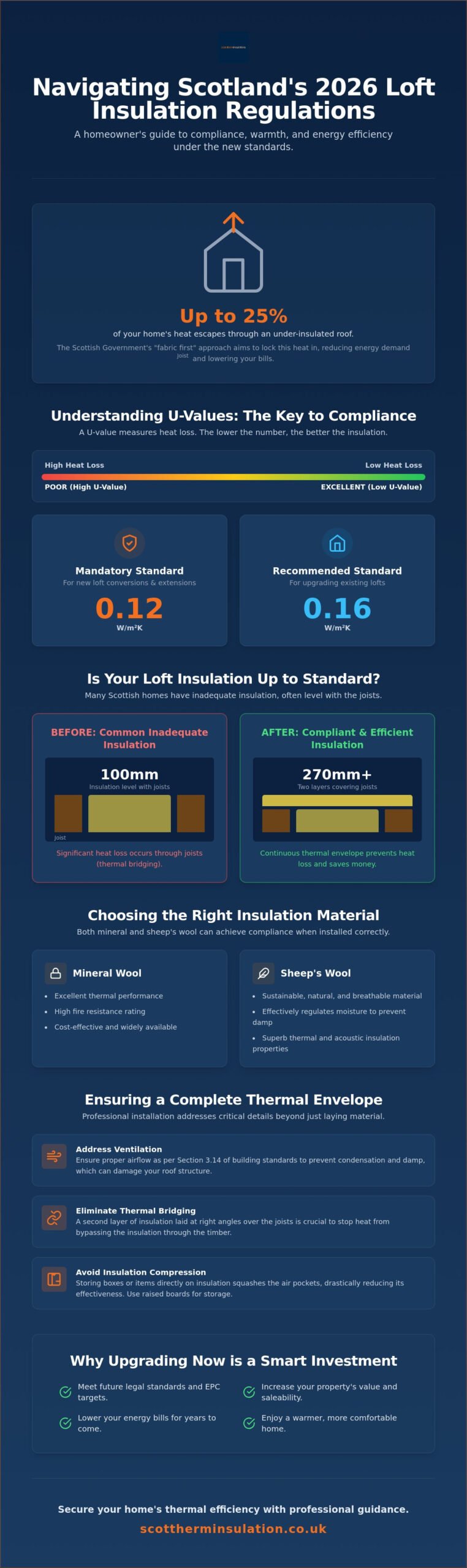
Did you know that up to 25% of your home’s heat is currently escaping straight through your roof? In our challenging Scottish climate, maintaining a warm property often feels like a losing battle against rising energy costs. You’ve likely heard conflicting reports about changing government mandates and feel concerned that your current setup won’t meet the loft insulation regulations Scotland 2026 requirements. It’s a common worry for homeowners who want to protect their property’s value and ensure future compliance for house sales or new tenancies.
We believe that meeting energy standards should bring peace of mind, not stress. This guide provides a clear interpretation of the latest Scottish Building Standards to help your home stay warm and cost-effective. We’ll explain the mandatory 0.12 W/m²K U-value targets for roof conversions and the 0.16 W/m²K recommendation for existing lofts. You’ll also find a practical roadmap for upgrading with sustainable materials like sheep’s wool or specialist mineral wool. By the end, you’ll know exactly how to access available grants and secure your home’s thermal efficiency for years to come.
Key Takeaways
- Understand how the Scottish Heat in Buildings Bill impacts your property and why government mandates are tightening for residential homes.
- Discover the specific loft insulation regulations scotland 2026 targets, including the shift towards a mandatory 0.12 W/m²K U-value for roof conversions.
- Compare the thermal performance and fire safety of mineral wool against sustainable sheep’s wool to find the ideal solution for your attic space.
- Learn how to address Section 3.14 ventilation requirements to prevent damp and condensation whilst upgrading your home’s thermal envelope.
- Gain a clear roadmap for conducting professional insulation surveys to ensure your property remains compliant, warm, and ready for future house sales.
Understanding Loft Insulation Regulations in Scotland for 2026
The Scottish Government is currently refining the Heat in Buildings Bill to accelerate the transition to Net Zero by 2045. For homeowners, the year 2026 represents a pivotal milestone in how we manage domestic energy. These upcoming loft insulation regulations scotland 2026 are designed to move beyond simple suggestions and towards mandatory property readiness. By prioritising a “fabric first” approach, the government aims to reduce energy demand at the source before homeowners invest in renewable heating systems. This strategy ensures that every watt of heat generated stays inside the building, protecting residents from the volatile energy prices we’ve seen in recent years.
The Heat in Buildings Bill: What Homeowners Must Know
The trajectory towards a carbon-neutral Scotland involves tightening energy efficiency standards every few years. By 2026, private landlords starting new tenancies must ensure their properties reach a minimum Energy Performance Certificate (EPC) Band C. Whilst owner-occupiers aren’t yet under the same immediate legal deadline for existing homes, the direction of travel is clear. These changes are part of a broader legal framework established under UK Building Regulations, though Scotland maintains its own more stringent Technical Handbooks. High-performance insulation is the most cost-effective way to hit these targets. Failing to upgrade now could complicate future property sales or leave you with unnecessarily high bills during our harsh winters.
Mandatory Standards vs. Best Practice in 2026
It’s vital to distinguish between legal mandates for building warrants and general best practices. If you are converting a loft or extending your home, you must meet the strict 0.12 W/m²K U-value standard set by Section 6 of the Technical Handbooks. This is significantly more demanding than the standards found in other parts of the UK. For existing homes not undergoing major renovations, the recommended standard remains 0.16 W/m²K. This is typically achieved by installing 270mm of mineral wool or an equivalent depth of sustainable sheep’s wool. Local Authorities across areas like Edinburgh, Fife, and Perth enforce these standards during the warrant process, so professional installation is essential for total compliance.
The “Insulation Envelope” refers to the continuous thermal barrier that separates the heated living space from the unheated attic or external environment in structures like traditional Edinburgh tenements or Perthshire bungalows. Maintaining this envelope is the primary goal of the 2026 mandates. Whether you live in a modern villa or a historic property, ensuring this barrier is unbroken is the key to domestic well-being and long-term financial efficiency.
The Technical Standard: Section 6 and U-Values Explained
To understand the loft insulation regulations scotland 2026, you must first grasp the concept of a U-value. Technically known as thermal transmittance, a U-value measures the rate of heat transfer through a specific building element, such as your roof. A lower number indicates better performance. Whilst older properties might have U-values exceeding 1.0, the current Scottish Government Building Standards push for much higher efficiency. For any new loft conversion in 2026, the mandatory U-value is a stringent 0.12 W/m²K. For existing homes, aiming for 0.16 W/m²K or better is the benchmark for long-term comfort and property value.
Achieving these targets requires specific material depths. Typically, 270mm to 300mm of mineral wool is necessary to meet modern expectations. However, simply laying the material isn’t enough. We must also address thermal bridging, where heat bypasses insulation through solid structures like timber joists. Air infiltration, or “draughts,” can also undermine your thermal envelope. A professional installation ensures a continuous barrier that eliminates these weak points, keeping your living space warm and your energy bills low.
Calculating Your Loft’s Current Performance
Many Scottish homes still rely on just 100mm of glass wool. This was once the standard, but it’s now considered wholly inadequate. If your insulation is level with your joists, you’re likely losing significant heat. It’s also vital to check for compression. If items have been stored directly on top of your insulation, its thermal efficiency drops. When you squash the material, you squash the air pockets that provide the insulation. If you aren’t sure where your property stands, you can book a professional assessment to establish your current U-value baseline.
Section 6 Energy Standards for 2026
The 2022 and 2023 updates to Section 6 introduced a focus on “Delivered Energy.” This metric looks at the total energy required to maintain a comfortable temperature in your home. Because heat rises, your loft acts as the primary barrier against energy waste. Upgrading your setup is a core part of the loft insulation scotland strategy for 2026. It’s the most effective way to lower your home’s energy demand, ensuring you stay ahead of tightening mandates whilst enjoying a more comfortable, cost-effective domestic environment.
Choosing Materials: Mineral Wool vs Sustainable Sheep’s Wool
Choosing the right material is a technical decision that directly impacts your home’s compliance and long-term health. Under the loft insulation regulations scotland 2026, homeowners must consider more than just thermal resistance. The Scottish Building Standards Technical Handbook outlines specific requirements for fire safety (Section 2) and sustainability (Section 7). In our damp, windy climate, moisture management is equally vital. If you choose a material that traps moisture against your roof timbers, you risk structural damage that far outweighs any energy savings. Your choice of insulation acts as a permanent upgrade to your property’s infrastructure, so it’s worth selecting a material that suits your building’s specific age and construction type.
Mineral Wool: The Industry Standard for Compliance
Mineral wool remains a popular choice for meeting the 2026 U-value targets without exceeding a modest budget. It is crafted from molten rock or slag, which gives it an exceptional non-combustible rating. This aligns perfectly with Section 2 fire safety mandates, providing an essential layer of protection for your family. Beyond safety, mineral wool offers high performance stability. It doesn’t settle or degrade significantly over time, meaning the thermal barrier you install today will likely perform just as well in several decades. It’s a functional, high-value solution for modern Scottish villas and bungalows that require a straightforward, reliable installation.
Sheep’s Wool: The Premium, Breathable Choice for Older Homes
For those living in traditional stone properties across Edinburgh and Perth, wool insulation is often the superior technical choice. Natural fibres possess a unique ability to absorb and release moisture without losing their insulating properties. This breathability is essential for older buildings that were designed to “breathe” through porous stone and lime mortar. By managing humidity levels, sheep’s wool prevents the condensation that leads to timber rot, protecting the heritage of your home. It’s an investment in both thermal comfort and structural longevity.
From a sustainability perspective, sheep’s wool is hard to beat. It features very low embodied energy, as the manufacturing process is far less industrial than that of synthetic alternatives. This helps homeowners meet the environmental spirit of Section 7 (Sustainability) whilst enjoying a cozy, natural domestic environment. Whilst the initial investment is higher, the dual benefit of structural protection and premium thermal comfort makes it a favourite amongst owners of historic Scottish housing stock. Choosing between these materials requires a balance of budget, property age, and your personal commitment to environmental responsibility.
How to Ensure Your Home Complies with 2026 Standards
Achieving compliance with the loft insulation regulations scotland 2026 requires a structured approach that balances thermal retention with structural safety. It isn’t just about adding more material; it’s about creating a system that works with your property’s unique architecture. To ensure your home remains a valuable asset, you need to follow a clear checklist that addresses both the insulation depth and the often-overlooked ventilation requirements. This systematic process protects your investment and ensures your property is ready for the mandatory energy standards arriving in 2026.
The Importance of a Professional Survey
Whilst many homeowners attempt to measure their own loft depth, DIY assessments often miss critical issues. Professional surveyors look for thermal bridges, hidden damp, and structural inconsistencies that could compromise your new insulation. This is particularly important for ‘room-in-roof’ properties, where standard rolls of mineral wool might not be the correct solution. We provide detailed surveys across Stirling and Fife, identifying the specific baseline of your property before any work begins. This professional oversight ensures that your installation actually meets the mandatory 2026 standards rather than just adding bulk to your attic.
Managing Ventilation and Condensation
Standard 3.14 of the Scottish Building Standards is just as vital as the thermal targets. A common mistake is to “seal” a loft in an attempt to keep heat in, but this often leads to a regulatory failure. Without adequate airflow, warm moist air from your living space condenses on the cold underside of your roof, leading to mould and timber rot. A compliant installation must include lap vents or soffit vents to maintain a steady stream of air. We ensure that whilst you have the recommended 270mm to 300mm of material, there is a clear 50mm gap at the eaves. This prevents the insulation from blocking the airflow, protecting your roof’s structural integrity whilst keeping your home warm.
Finally, always document the process carefully. When the 2026 EPC Band C requirements for new tenancies arrive, or when you decide to sell your home, having a certified record of your insulation depth and material type is essential. It provides the proof that your property is fully compliant with the latest mandates. To get started with a verified assessment of your home, you can book a professional insulation survey with our regional experts.
Why Local Expertise Matters for Scottish Insulation Compliance
Scotland’s weather requires a specialist approach. High humidity and wind-driven rain create a unique environment where standard insulation methods might fail if moisture management isn’t prioritised. Local expertise is essential to ensure your property remains compliant with the loft insulation regulations scotland 2026 whilst avoiding structural issues like timber rot or damp. We take immense pride in serving our local communities across Edinburgh, Fife, and Perth, bringing a deep understanding of the specific housing stock found in the Central Belt. Choosing a local, certified professional provides the security of a verified history and the peace of mind that your home’s thermal envelope is in expert hands.
ScotTherm: Your Partner in Energy Efficiency
We focus exclusively on residential thermal solutions, specialising in materials that thrive in the Scottish climate. Whether you require the non-combustible reliability of mineral wool or the breathable, premium performance of sustainable sheep’s wool, we tailor our approach to your building’s specific needs. Our team doesn’t just install insulation; we act as your guide through the complex landscape of Scottish energy policy. We help homeowners navigate the various insulation grants scotland, including the Home Energy Scotland (HES) grant of up to £7,500 and the ECO4 funding scheme, which is currently scheduled to end in December 2026. This local knowledge is vital because the loft insulation regulations scotland 2026 are distinct from the rules found in the rest of the UK.
Next Steps: Preparing Your Home for 2026
The journey toward a warmer, more cost-effective home starts with a single proactive step. With the 0% VAT rate on energy-saving installations set to expire on 31 March 2027, and grant schemes seeing high demand, acting now is a sound financial decision. Upgrading your loft is a long-term investment that pays for itself through lower utility bills and increased property value. Don’t wait for the 2026 deadlines to approach before securing your property’s future. By taking action today, you ensure your home remains compliant, cosy, and efficient for years to come. You can contact ScotTherm Insulation for a professional assessment to discover exactly how your home can meet the upcoming standards.
Secure Your Home’s Thermal Future
Preparing your property for the loft insulation regulations scotland 2026 is a proactive step toward long-term domestic well-being. We’ve explored how reaching the 0.12 W/m²K U-value target for conversions or the 0.16 W/m²K recommendation for existing homes protects both your wallet and your property’s value. Whether you opt for cost-effective mineral wool or premium, breathable sheep’s wool, correct installation remains the only way to avoid condensation and ensure full compliance with Section 6 standards. Maintaining a clear ventilation path at the eaves is just as vital as the material depth itself.
As specialists in Scottish building regulations and expert installers of sustainable sheep’s wool, we understand the unique demands of our regional climate. Our team provides dedicated local service across Edinburgh, Fife, and the Central Belt to help you navigate these mandates without stress. Don’t leave your home’s efficiency to chance whilst current funding and VAT benefits are still available. It’s the perfect time to upgrade your thermal envelope and secure your property against future energy price volatility.
Book Your Professional Insulation Survey with ScotTherm Today to ensure your property remains warm, compliant, and cost-effective for years to come. Taking action now is the best way to enjoy a cosier home and lower energy bills immediately.
Frequently Asked Questions
What is the minimum loft insulation thickness required in Scotland for 2026?
To achieve the recommended 0.16 W/m²K U-value, a thickness of 270mm is typically required when using mineral wool. If you are aiming for the more stringent 0.12 W/m²K standard required for certain roof conversions, you may need a depth of 300mm or more depending on the specific material’s thermal conductivity. It is essential to ensure this thickness is consistent across the entire loft floor without compressing the material, as squashing the fibres reduces their thermal efficiency.
Do the 2026 regulations apply to existing homes or just new builds?
The loft insulation regulations scotland 2026 primarily mandate specific standards for new builds, extensions, and conversions requiring a building warrant. However, existing homes are increasingly impacted by the Heat in Buildings Bill, which aims for all homes to meet a minimum EPC Band C by 2033. Private landlords face an earlier 2026 deadline for new tenancies to reach this rating, making high-performance insulation a practical necessity for older Scottish housing stock today.
Can I still use mineral wool, or must I switch to eco-friendly materials?
You can certainly still use mineral wool to comply with all current and upcoming Scottish Building Standards. It remains the industry standard due to its excellent non-combustible fire rating and cost-effective thermal performance. Whilst eco-friendly options like sustainable sheep’s wool are highly recommended for traditional stone properties due to their breathability and moisture management, mineral wool is a perfectly valid and compliant choice for modern homes in the Central Belt.
Will I be fined if my loft insulation does not meet the 2026 standards?
Homeowners aren’t typically fined simply for having thin insulation in an existing property. However, failing to meet the loft insulation regulations scotland 2026 during a renovation or conversion can result in the Local Authority refusing to issue a completion certificate. This can prevent you from legally selling the property or occupying the new space. Additionally, landlords who fail to meet the EPC Band C requirement for new tenancies in 2026 may face civil penalties from the government.
How does loft insulation affect my EPC rating in Scotland?
Loft insulation is one of the most significant factors in determining your property’s EPC rating because it addresses the area where 25% of heat loss occurs. Upgrading from 100mm to the recommended 270mm can often jump a property up a full EPC band. This is crucial for meeting the upcoming 2026 mandates for the private rental sector and ensures your home remains attractive to buyers who are increasingly wary of high heating costs in our climate.
Are there grants available in 2026 to help with the cost of upgrading loft insulation?
Several schemes are available to help Scottish homeowners manage upgrade costs in 2026. The Home Energy Scotland (HES) Grant and Loan provides up to £7,500 for energy efficiency measures, whilst the Warmer Homes Scotland scheme offers support for eligible vulnerable households. The UK-wide ECO4 scheme also provides insulation funding for low-income homes until December 2026, and a 0% VAT rate on energy-saving materials remains in effect until 31 March 2027.
What is the recommended U-value for a Scottish loft conversion in 2026?
For a loft conversion in Scotland, the mandatory minimum U-value is 0.12 W/m²K as specified in Section 6 (Energy) of the Technical Handbooks. This standard is more stringent than the requirements found in the rest of the UK and reflects the Scottish Government’s commitment to higher energy efficiency. Achieving this usually requires a combination of high-performance insulation between and over the rafters, carefully installed to maintain the integrity of the thermal envelope.
How do the regulations handle insulation in traditional or listed buildings?
Building standards recognise that traditional stone properties and listed buildings require a sympathetic approach to avoid moisture traps. Whilst the 2026 regulations still aim for high efficiency, Local Authorities often allow for “breathable” insulation solutions like sustainable sheep’s wool in historic structures. These materials manage humidity naturally, preventing timber rot in older roofs whilst still significantly improving thermal performance. Always consult with a specialist who understands the specific requirements for Scottish heritage buildings.