
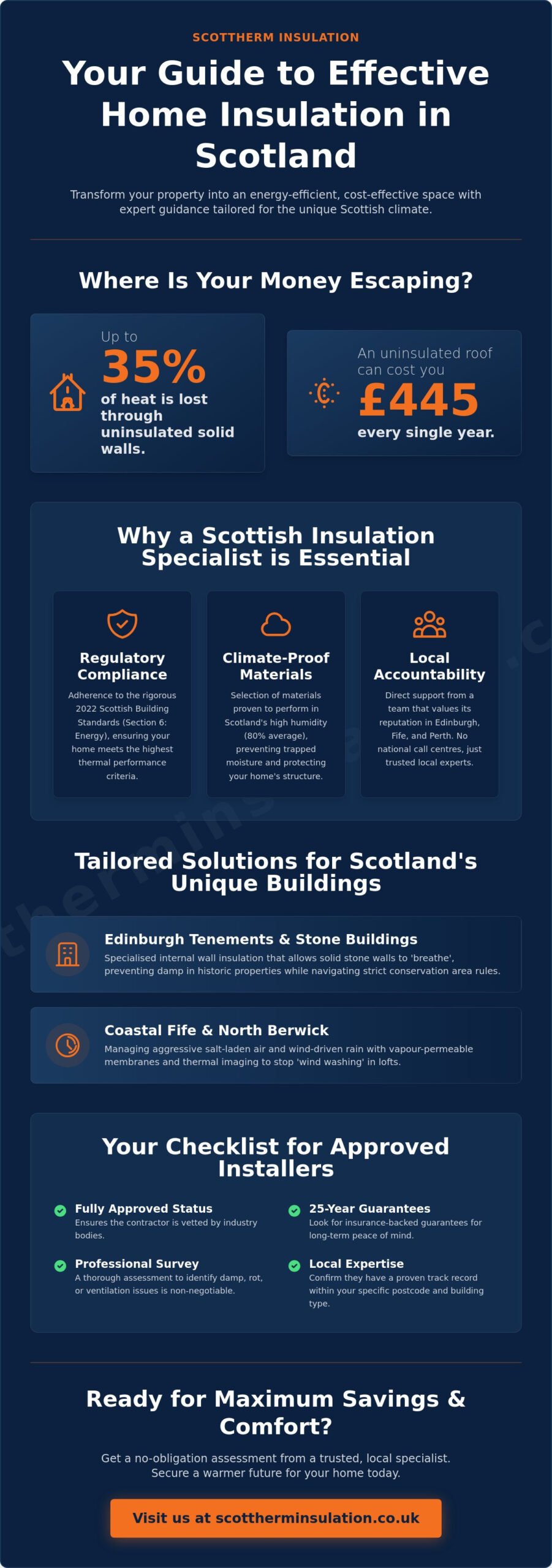
How much of your monthly heating budget is actually warming your living room, and how much is simply escaping through your walls? For many homeowners across Edinburgh, Fife, and Perth, the reality is that up to 35% of heat is lost through uninsulated solid walls, according to recent Energy Saving Trust figures. It’s a common frustration to watch your hard-earned money vanish whilst battling damp or condensation in a traditional stone property. You shouldn’t have to choose between a warm home and a manageable bank balance.
If you’re currently searching for the most reliable insulation services near me, we’re here to help you secure a warmer future. This guide provides the essential knowledge to find fully approved installers who specialise in the Scottish climate, ensuring you achieve maximum savings and comfort. We’ll explore the best materials for local builds and provide a straightforward breakdown of ECO4 grant eligibility to help you access professional installation with long-term guarantees. By the end of this article, you’ll know exactly how to transform your property into a more energy-efficient, cost-effective space.
Key Takeaways
- Understand why Scottish building standards require local expertise to navigate our unique weather patterns and specific thermal requirements.
- Identify the primary insulation measures for homes in Perth, Stirling, and Fife that deliver the best return on investment and long-term durability.
- Discover how to source the most reliable insulation services near me by comparing the benefits of mineral wool against sustainable sheep’s wool.
- Follow our essential checklist to vet installers, ensuring they are fully approved and hold the necessary certifications to guarantee quality.
- Learn how a regional specialist can help you achieve maximum savings and comfort whilst ensuring your home remains energy-efficient for years to come.
Why ‘Insulation Services Near Me’ in Scotland Requires a Local Specialist
Searching for “insulation services near me” in Scotland involves more than finding a competitive quote. It’s about securing a team that understands the unique pressures of the Scottish climate. Our weather is significantly wetter and windier than the UK average. The Scottish Building Standards (specifically Section 6: Energy) underwent major updates in December 2022. These regulations demand higher thermal performance than many generic UK-wide installers are used to delivering. A local specialist ensures your home meets these rigorous criteria whilst achieving Maximum Savings & Comfort.
Generic advice often fails because it doesn’t account for Scotland’s 80% average relative humidity. Using the wrong materials can lead to trapped moisture and structural rot. When Comparing Materials: Mineral Wool vs Sustainable Sheep’s Wool, a local expert knows which product will perform best in a damp environment. We use our Proven Track Record to select materials that maintain their R-value even when the North Sea winds are at their peak.
A “Fully Approved” local installer is essential for your long-term security. This status means the contractor is vetted by industry bodies and can offer 25-year insurance-backed guarantees. Regional accountability is the cornerstone of our service. If you have a question about your installation three years later, you don’t want to be stuck in a national call centre queue. You want a local team that values its reputation within the Edinburgh, Fife, and Perth communities.
- Compliance: Adherence to the latest 2022 Scottish Building Standards.
- Durability: Materials chosen for high-humidity environments.
- Security: Fully Approved status ensures valid manufacturer warranties.
- Local Trust: Direct accountability from a specialist in your postcode.
Insulating Edinburgh Tenements and Traditional Stone Buildings
Edinburgh’s historic landscape presents unique challenges. Solid stone walls in 19th-century tenements don’t have cavities to fill. We focus on internal wall insulation that allows the building to breathe. It’s vital to prevent moisture buildup that causes dampness in older masonry. We also help homeowners navigate strict planning constraints in Edinburgh conservation areas, ensuring thermal upgrades don’t clash with the city’s architectural heritage.
Coastal Fife and North Berwick: Managing Salt and Moisture
Coastal homes in Fife and East Lothian face aggressive salt-laden air and wind-driven rain. These conditions increase the risk of interstitial condensation. We specify vapour-permeable membranes to protect your structure. High winds in East Coast towns often cause “wind washing,” where cold air bypasses loft insulation. We use thermal imaging to identify these specific draught hotspots, ensuring your “insulation services near me” search results in a home that stays warm regardless of the coastal gale.
Essential Insulation Services for Homes in Perth, Stirling, and Fife
Homeowners searching for insulation services near me often face the challenge of deciding which specific measures will provide the best return on investment. In the Scottish climate, heat loss is a constant battle against rising energy costs. Data from the Energy Saving Trust indicates that an uninsulated, detached home can lose up to £445 per year through the roof alone. By targeting specific areas of heat loss, you can transform the thermal performance of your property and secure long-term financial stability.
Professional installers don’t just “add wool” to a loft; they conduct a thorough assessment of the building’s fabric. A professional survey is the only way to identify hidden issues like damp, wood rot, or inadequate ventilation that could lead to structural damage if ignored. This assessment also ensures your home meets the criteria for various Scottish Government energy saving schemes, which provide vital support for upgrading older housing stock.
Professional Loft Insulation: The First Line of Defence
Loft insulation is widely regarded as the most cost-effective way to stop heat escaping upwards. For most Scottish attics, we recommend a depth of 270mm to achieve the best thermal resistance. There is a distinct difference between joist and rafter insulation that homeowners must understand. Joist insulation keeps the heat in the living spaces below, whilst rafter insulation creates a warm roof environment suitable for storage. You can read more about these technical differences in our loft insulation scotland guide.
Underfloor Insulation for Suspended Timber Floors
Draughts rising through floorboards are a common complaint in older Perth and Stirling properties. Suspended timber floors often sit above a cold, damp solum, allowing icy air to permeate the ground floor. We install high-performance breathable wool between the floor joists, secured with specialist netting. This process eliminates cold spots and is especially beneficial for ground-floor tenement flats. It’s a practical solution that makes a noticeable difference to floor surface temperatures instantly.
Room in Roof Solutions for Attic Conversions
Many Fife homes feature attic conversions that were built before modern building standards were introduced. These rooms often feel significantly colder than the rest of the house due to thermal bridging in the roof slopes and dormers. We resolve this by using a combination of high-performance foil and rigid insulation boards. This setup creates a continuous thermal envelope, effectively turning a cold, draughty space into a comfortable living area. If you want to improve your home’s EPC rating and comfort levels, request a survey from our specialist team today.
Choosing the right insulation services near me involves more than just picking a material. It requires a strategic approach that considers the age of your property, your budget, and your long-term energy goals. By investing in professional installation, you ensure that every pound spent contributes to a warmer, more efficient home.
Comparing Materials: Mineral Wool vs Sustainable Sheep’s Wool
Selecting the correct material is the most critical factor for the longevity of Scottish homes. When you search for insulation services near me, you’ll likely encounter two dominant options: mineral wool and sustainable sheep’s wool. Each material offers distinct advantages tailored to specific property types. For the 2.5 million homes across Scotland, this decision impacts more than just warmth; it dictates how your building breathes and manages the damp North Sea air.
The environmental impact of your insulation choice carries long-term weight. Sheep’s wool is a renewable resource with a remarkably low carbon footprint, whilst mineral wool is typically manufactured from recycled glass or volcanic rock and offers a unique trifecta of thermal efficiency, acoustic dampening, and non-combustible safety. According to the Energy Saving Trust insulation guide, selecting the right material for your roof space can lead to significant carbon savings over a 40-year period. Beyond energy, health considerations like Volatile Organic Compounds (VOCs) and fire safety ratings should guide your final selection.
The Benefits of Sustainable Sheep’s Wool in Scotland
Sheep’s wool is often the superior choice for the humid Scottish climate because of its natural breathability. It can absorb up to 33% of its own weight in moisture without losing thermal efficiency, which prevents condensation from rotting timber joists in older Fife tenements. It’s naturally fire-retardant and acts as a natural air purifier by trapping harmful chemicals like formaldehyde. Choosing wool insulation for Edinburgh and Fife homes supports local agricultural industries whilst providing a high-performance, eco-friendly solution for your home.
Mineral Wool: The Versatile Industry Standard
Mineral wool remains the industry standard for modern Scottish house builds because it’s incredibly cost-effective. It provides excellent thermal performance and has a melting point exceeding 1,000°C, offering a robust fire barrier for your family. When you book insulation services near me, our installers use specific friction-fit techniques to ensure the batts sit tightly between rafters. This precision eliminates gaps and prevents the thermal bridging that often leads to cold spots in contemporary homes.
Both materials provide the “Maximum Savings & Comfort” that ScotTherm clients expect. Whether you opt for the moisture-regulating power of natural wool or the proven reliability of mineral wool, using fully approved contractors ensures your investment protects your property for decades. We focus on a “Feature-Benefit” logic, ensuring the material you choose matches the specific architectural needs of your Edinburgh, Fife, or Perth property.
How to Identify Approved Insulation Installers in Your Area
Finding reliable insulation services near me requires a disciplined approach to vetting. You’re looking for “Fully Approved” contractors who understand the unique challenges of the Scottish climate. A “Proven Track Record” isn’t just a marketing phrase; it’s a necessity for protecting your property. Before signing any contract, use this checklist to separate professional specialists from “cowboy” contractors:
- PAS 2030:2019 Certification: This is the industry gold standard for energy efficiency installers.
- TrustMark Registration: This government-endorsed quality scheme ensures the business has been thoroughly vetted.
- Local Case Studies: A reputable firm will provide examples of work completed on similar properties in Edinburgh, Fife, or Perth.
- Full Public Liability Insurance: Never work with a team that lacks at least £2 million in coverage.
A professional home insulation survey is the first step toward achieving maximum savings and comfort. During this 45 to 60-minute assessment, an expert will use tools like borescope cameras or thermal imaging to inspect your wall cavities and loft space. They’ll also check for adequate ventilation. If a contractor offers a quote over the phone without visiting your home, they aren’t providing the level of precision your property deserves.
Understanding ECO4 Grants and Funding in Scotland
The ECO4 scheme is a £4 billion UK government initiative running until 31 March 2026. It’s designed to help Scottish homeowners with an Energy Performance Certificate (EPC) rating of D, E, F, or G. In areas like Fife and Perth, you might be eligible for free or heavily subsidised insulation through “LA Flex” rules, which allow local councils to set their own eligibility criteria. You must use ECO4-approved installers to access this funding. This ensures the work is monitored by TrustMark, giving you peace of mind that the installation meets strict energy-saving standards.
Questions to Ask Before Hiring an Insulation Contractor
Before the work begins, ask about insurance-backed guarantees (IBGs). These 25-year warranties protect you even if the installation company ceases trading. You should also ask for a specific timeline; a standard cavity wall or loft installation typically takes 2 to 5 hours. Finally, clarify the post-work clean-up. Professional teams use industrial vacuums and protective floor coverings to ensure your home remains tidy. Choosing the right insulation services near me means finding a partner who prioritises your domestic well-being alongside technical proficiency.
ScotTherm Insulation: Local Experts for Maximum Savings and Comfort
Choosing a partner for your home energy project requires more than just a quick search for insulation services near me. It demands a team that understands the unique architectural landscape of the Central Belt and the East Coast. ScotTherm Insulation focuses specifically on these regions to provide a service that is both physically and culturally local. We know the damp challenges of the Fife coast and the specific thermal requirements of Edinburgh’s historic stone buildings. By choosing a regional specialist, you gain the benefit of local accountability and a team that is never more than a short drive away.
Our commitment to quality starts with the materials we select. We prioritise high-performance options like sheep’s wool and mineral wool, which offers superior thermal efficiency, acoustic dampening, and non-combustible fire safety for Scottish homeowners, because they offer superior breathability and fire resistance. These materials aren’t just effective; they’re sustainable. We organise every project to ensure your daily routine remains uninterrupted. Our installers work efficiently, often completing loft or underfloor upgrades in a single day, leaving your home cleaner than they found it. To maintain this high standard of cleanliness across your garden as well, you can check out Scot Pooper Scoopers for professional waste removal services in Lanarkshire. The ScotTherm promise is built on being Fully Approved and consistently reliable, ensuring every homeowner feels secure in their investment.
Our Proven Track Record Across Scotland
We’ve built a reputation for excellence through successful projects in Stirling, Perth, and North Berwick. In 2023 alone, our installations helped hundreds of households reduce their energy demand. We don’t work in a vacuum; we collaborate alongside the best installers in the country to share best practices and technical innovations. This collective expertise is why our customers consistently report improved internal temperatures and lower monthly bills. When we say we provide a “Proven Track Record,” we’re talking about tangible results in homes just like yours.
Get Started with a Specialist Free Insulation Inspection
The first step toward a more efficient home is a comprehensive thermal assessment. Our experts look for more than just thin insulation; we identify hidden draught points, moisture risks, and cold bridges that standard surveys might miss. We use this data to create a bespoke plan for your property. Taking action now protects your home from rising energy costs and improves your overall domestic well-being. It’s a straightforward process that starts with a simple conversation. Contact ScotTherm Insulation today to secure your home’s future and book your free professional survey.
Secure Your Home’s Comfort and Efficiency
Choosing the right insulation isn’t just about filling gaps; it’s about protecting your property against the unique challenges of the Scottish climate. By opting for sustainable sheep’s wool or high-performance mineral wool, you’re investing in long-term thermal stability. Our team at ScotTherm brings a proven track record across Edinburgh, Fife, and Perth, ensuring every installation meets rigorous safety standards. As fully approved Scottish installers, we focus on delivering maximum savings and comfort through precise, professional fitting.
When searching for reliable insulation services near me, it’s vital to verify that your contractor is fully accredited. This avoids costly mistakes and ensures your property remains breathable. We’ve helped hundreds of homeowners across the central belt reduce their energy bills whilst improving their indoor air quality with eco-friendly materials. You don’t have to settle for generic solutions. Local expertise is right on your doorstep, specifically tailored for properties in Stirling and the surrounding areas.
Take the first step towards a more sustainable and warmer household. Book Your Specialist Free Insulation Inspection with ScotTherm Today and start enjoying the benefits of a professionally insulated home.
Frequently Asked Questions
Are there insulation grants available for homeowners in Scotland in 2026?
Yes, the ECO4 scheme is scheduled to run until 31 March 2026, providing fully funded energy efficiency measures for eligible households across Scotland. Homeowners can also access the Home Energy Scotland Grant and Loan scheme, which currently offers up to £7,500 for various energy efficiency improvements. These government-backed initiatives help Scottish residents reduce their carbon footprint whilst significantly lowering monthly energy costs through professional upgrades.
How do I know if my loft insulation needs replacing or topping up?
You should check the depth of your current material; if it’s below the recommended 270mm, you need a top-up. Look for signs of compression, dampness, or “settling” where the material has lost its original loft. If your insulation was installed before 2003, it’s likely only 100mm thick and won’t meet modern efficiency standards. Upgrading ensures you maintain maximum comfort and stop heat escaping through the roof.
Can insulation cause damp or mould in older Scottish stone houses?
Insulation can cause damp if the wrong materials are used in traditional stone buildings. These structures must “breath” to allow moisture to escape through the masonry. Using non-breathable synthetic boards can trap water vapour, which leads to mould growth and timber rot. Professional installers use breathable materials like wood fibre or lime-based systems to protect the building’s fabric and ensure a healthy living environment for occupants.
What is the best type of insulation for a room-in-roof conversion?
High-performance PIR rigid foam boards are the most effective choice for room-in-roof conversions because they provide high thermal resistance with minimal thickness. This saves valuable living space while meeting strict Scottish Building Standards. Combining these boards with a high-quality vapour control layer prevents interstitial condensation within the roof structure. It’s a proven method for turning a cold attic into a warm, energy-efficient living area that adds value to your home.
How much can I save on my heating bills by installing professional insulation?
Installing professional insulation can save you up to £250 per year on heating bills for a typical detached house, according to 2024 Energy Saving Trust data. These savings are achieved by reducing the 25% of heat that escapes through an uninsulated roof. When searching for insulation services near me, choosing an approved installer ensures these performance figures are actually met. It’s one of the most cost-effective ways to improve your home’s EPC rating.
Do I need to move out of my house during the insulation installation?
You don’t need to move out of your home during most insulation projects. Loft and cavity wall installations are typically completed within 1 to 5 hours with minimal disruption to your daily routine. For more intensive internal wall insulation, our team works room-by-room to ensure you can remain comfortable in your property throughout the process. We prioritise cleanliness and efficiency, leaving your home tidy and significantly warmer once the work is finished.
What is the difference between breathable and non-breathable insulation?
Breathable insulation allows water vapour to pass through the material, which is essential for traditional Scottish properties built with stone. Non-breathable insulation, such as standard PIR boards, acts as a vapour barrier and blocks moisture movement. Choosing the correct type prevents structural rot and maintains healthy indoor air quality. Our specialists assess your property’s specific construction to ensure we supply and fit the most appropriate materials for long-term protection.
Is sheep’s wool insulation better than standard mineral wool for lofts?
Sheep’s wool is often superior for Scottish homes because it can absorb and release moisture without losing its insulating properties. While standard mineral wool is a cost-effective choice, wool insulation is a sustainable, non-toxic alternative that provides better humidity regulation. Our team often recommends it for clients seeking eco-friendly insulation services near me who want long-term durability. It’s an excellent investment for those who prioritise natural materials and a breathable home environment.